Gala-Salvador Dalí Foundation


Search
Search    
Museums Menu ràpidServicesDalí
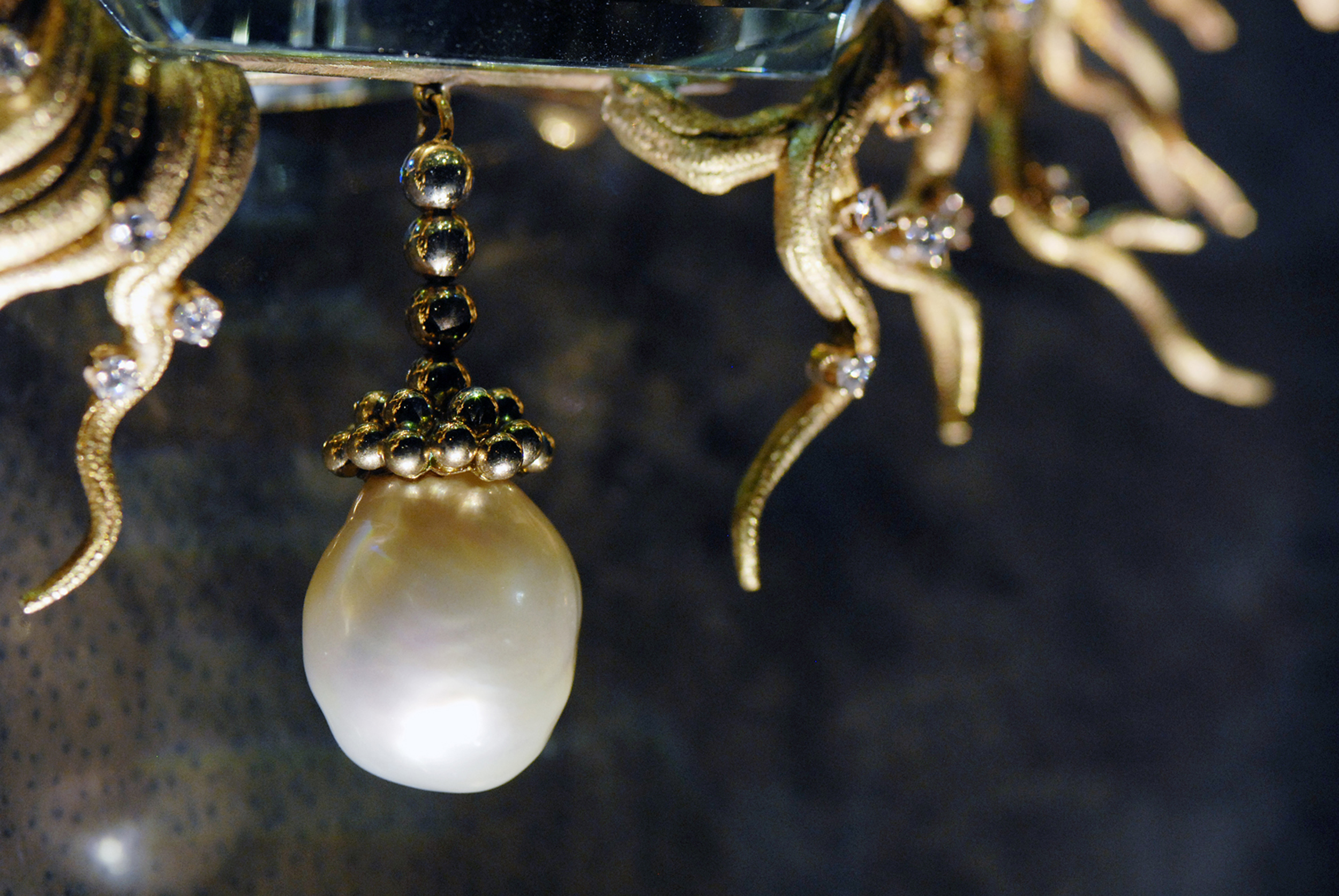
 You are in: Home > Museums > Dalí·Jewels > History   Study for the jewel The Royal Heart
Study for the jewel The Royal Heart
© Martí Gasull
Figueres: Dalì� Joies Print
HISTORY

The Royal Heart, 1953
Gold, rubies, sapphires, emeralds, aquamarines, peridots, garnets, amethysts, diamonds and pearls
8 x 6,8 x 2,1 cm
See the design

The Persistence of Memory, 1949
Gold and diamonds
7,8 x 6,8 x 2,1 cm
See the design

The Eye of Time, 1949
Platinum, ruby and diamonds
4 x 6 x 1,7 cm
See the design

The Tree of Life Necklace, 1949
Gold, diamonds and sapphires
8,6 x 39 cm
See the design

The Gala-Salvador Dalí Foundation is presenting at the Dalí Theatre-Museum in Figueres the new permanent exhibition DALÍ·JOIES, for which the architect Òscar Tusquets has completely refurbished a building annexed to the museum. The two floors that house the collection of jewels have an entrance independent from that of the museum, and can therefore be visited separately. The exhibition, which is permanent, includes the thirty-nine jewels in gold and precious stones from the old Owen Cheatham collection, two jewels made later, and the twenty-seven drawings and paintings on paper that Salvador Dalí made in designing the jewels. The whole forms an extensive collection of works carried out by the artist between 1941 and 1970, providing a perfect illustration of the various phases of his artistic development.

With the consultancy and supervision of the Spanish Gemmology Association, the collection was acquired by the Gala-Salvador Dalí Foundation from a Japanese organisation in 1999 at a cost of 900 million pesetas (5.5 million Euros). Since that time, the Association’s experts, in collaboration with technicians from the Foundation’s Conservation Department and the Dalí Study Centre, have been cataloguing each of the pieces and designing a permanent exhibition for them.


Chronology


The history of these jewels started in 1941. The first 22 were acquired by the US millionaire Cummins Catherwood. Salvador Dalí made the designs for the pieces on paper, with all kinds of details and great precision of shapes, materials and colours, while they were made up in New York by the team of the Argentinean-born silversmith Carlos Alemany under the close supervision of the artist himself. In 1958 they were acquired by The Owen Cheatham Foundation, a prestigious US foundation created in 1934 that lent the jewel collection out so that various charitable, educational and cultural organisations could raise funds by exhibiting it, and finally deposited it at the Virginia Museum of Fine Arts in Richmond. The collection of jewels had already been exhibited temporarily at the Dalí Theatre-Museum in Figueres during the months of August and September 1973, a year before the Museum was inaugurated and while the Master was still alive. In 1981 the collection was acquired by a Saudi multimillionaire, and later by three Japanese entities, the last of which agreed to sell it to the Gala-Salvador Dalí Foundation.

All the pieces in the collection are unique items, and the combination of materials, dimensions and shapes used by Salvador Dalí make this a one-off set in which the artist managed to express in a unique way the wealth of his singular iconography. Gold, platinum, precious stones (diamonds, rubies, emeralds, sapphires, aquamarines, topazes, etc.), pearls, corals and other noble materials combine to form hearts, lips, eyes, plant and animal forms, religious and mythological symbols and anthropomorphic forms.


The raison d'être


Following the models of the Italian Renaissance masters he so much admired (Leonardo, Michelangelo, Raphael, Cellini, etc.), Salvador Dalí used all the idioms of modern culture to develop his artistic discourse: painting, drawing, etching, sculpture, architecture, photography, theatre, cinema, literature and silversmithing. With this work, carried out alongside his better-known facet as a painter, Salvador Dalí went once again more deeply into his global conception of art, seeing it as a language on which no limits were imposed and that had to be expressed through any medium and expressive technique.

As well as designing the forms of the jewels, Salvador Dalí personally selected each of the materials used, not only for their colours or value but also for their meaning and the symbolic connotations of each and every one of the previous stones and noble metals. Some of the jewels that form part of this collection, such as The Eye of Time (1949), Royal Heart (1953), or The Space Elephant (1961), have become key works and are considered to be as exceptional as some of his paintings.

Salvador Dalí said of these jewels: “Without an audience, without the presence of spectators, these jewels would not achieve the function for which they were created. The viewer is thus the final artist. His look, heart and mind – with greater or lesser ability to understand the creator’s intention – imbue the jewels with life.”


See the new books of DALI·JOIES

TopTop
© 2010 - Gala-Salvador Dalí Foundation - All rights reserved - Legal notice - Privacy - Copyright