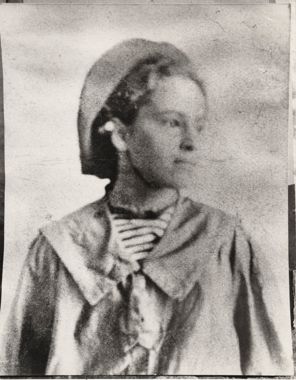
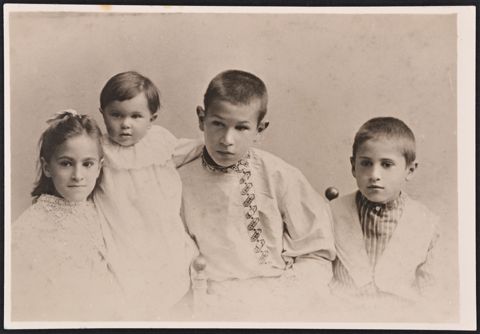
History places the origins of Elena Diakonova – Gala’s real name – in the Tatar city of Kazan, where she was born on 26 August 1894. The daughter of Ivan Diakonov and Antonina Deulina, she was the third of four siblings. Her father, a civil servant at the Ministry of Agriculture, passed away when his children were still young and her mother began a relationship with a Moscow lawyer, Dimitri Ilyich Gomberg, from whom Gala would adopt her patronymic.
Gala behaved with the dignity of true pride: in a completely simple, natural, independent way, without stooping to ask herself why she was dressed worse than the others, without stooping to pay attention to her clothes (what makes Cinderella the heroine of the ball is that she goes hand in hand with destiny).
Anastasía Tsvietáieva, Memorias. Mi vida con Marina, Hermida, Madrid, 2018
In Moscow, Gala and her siblings grew up surrounded by books and received a privileged education. Her mother, cultured and a keen reader, passed this passion on to Gala, which she would cultivate throughout her life. At school, she was a brilliant student. She shared a classroom with Anastasia Tsvetayeva – sister of the great Russian poet Marina Tsvetayeva. In her memoirs, Anastasia recalled the long afternoons spent with her cherished friend and explained that, when Marina joined them and spoke of her future as a poet, Gala listened to her “as if drinking life-giving water”. She too dreamt of being a poet and a creator, but soon realised that her gift lay in another kind of talent: the ability to recognize artistic genius, and encourage and support it so that it could reach its fullest expression.
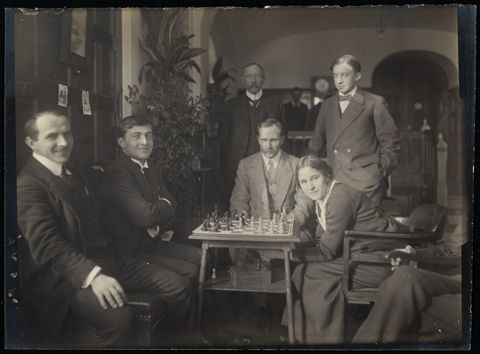
From a young age, her delicate health forced her to convalesce for long periods of time. So much so that in 1912, she was sent to the Clavadel Sanatorium in Davos, Switzerland, for a respiratory condition. There she met a young Frenchman, Paul Eugène Grindel, who would later become known as Paul Éluard. They soon began a romantic relationship driven by their shared passion for literature and poetry. During that period, Gala encouraged him to write and inspired his first verses, while also helping him to copy and proofread his writings. She would call this collaboration between them “compatible work.”
In February 1914, both were discharged from the sanatorium. Gala returned to Russia to complete her secondary education at the M. G. Brukhonenko Girls’ School, where she received excellent grades and a decree from the Tsar authorising her to work as a primary school teacher. Paul Éluard, for his part, returned to Paris where he was mobilised at the outbreak of the First World War. That same year, Éluard published Dialogue des inutiles in Paris, with a preface by Gala, who signed it under the mysterious pseudonym Reine de Paleùglnn. It is her first published text of which we have any record.
Two years had passed since their farewell in Clavadel, but the Gala and Éluard’s commitment remained intact. The thousands of kilometres that separated them and the opposition of their respective families only fuelled the romance between the two young people, who were determined to meet up again in Paris. In 1916, Gala, obstinate and romantic, left her life in Moscow behind to pursue a dream. At just over twenty years old, she crossed a war-torn Europe to reunite with Paul Éluard and marry him. From then on, it was Gala who decided her own future, a bright and promising one, for she had the conviction and tenacity of someone who knew how to turn dreams into reality.
D 44442
Gala
[s.d.]
D 9042 · 5125
Gala with her siblings Lidia, Vadim and Nikolai
c. 1904
D 4059 · 102
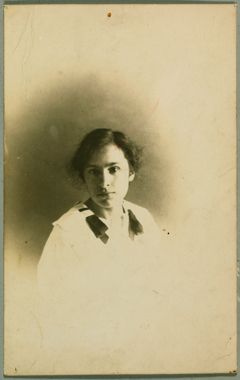
Gala
1910s
D 4814 · 1153
Four unidentified personalities, Paul Éluard and Gala In Clavadel
1913
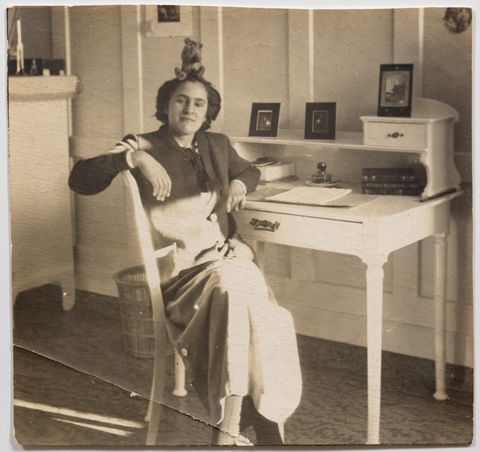
D 4819 · 1158
Gala in Paul Éluard’s room in the Clavadel sanatorium, Switzerland
1913
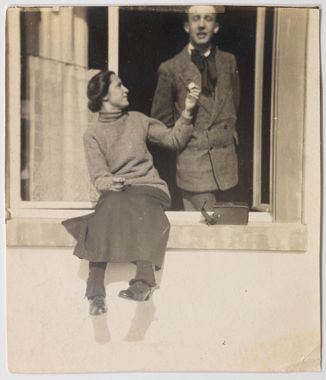
D 4314 · 357
Gala and Paul Éluard in Clavadel
1913
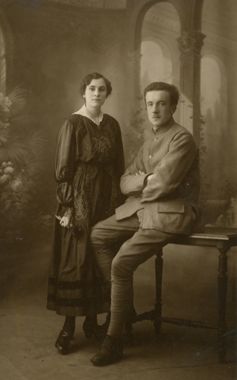
D 63722
Gala and Paul Éluard on their wedding day in Paris
1917
Bibliothèque Emmanuel Boussard