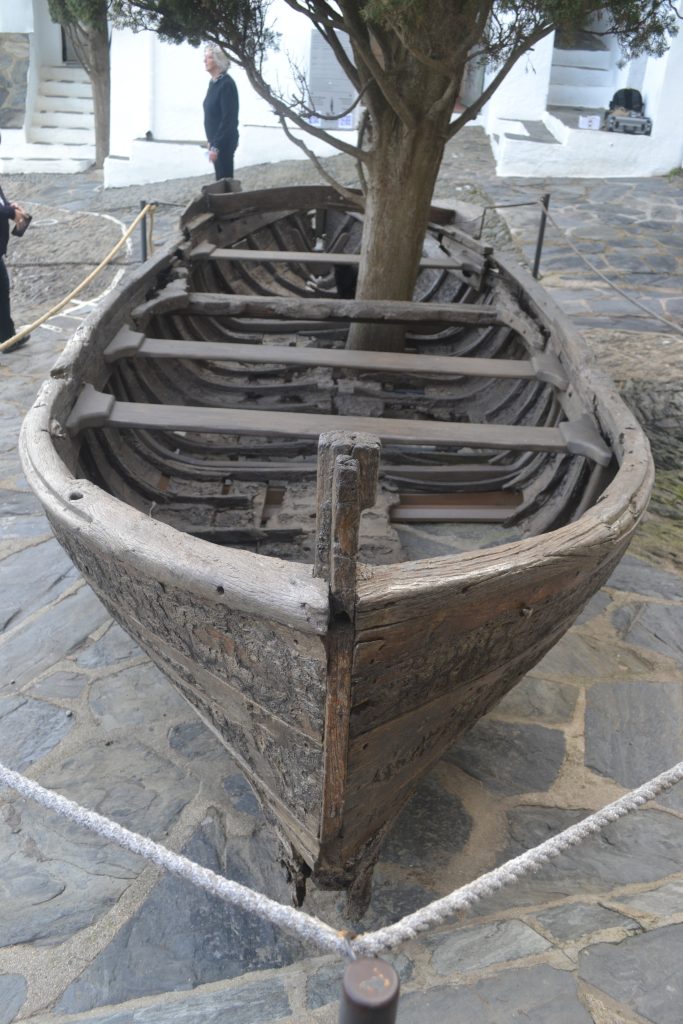
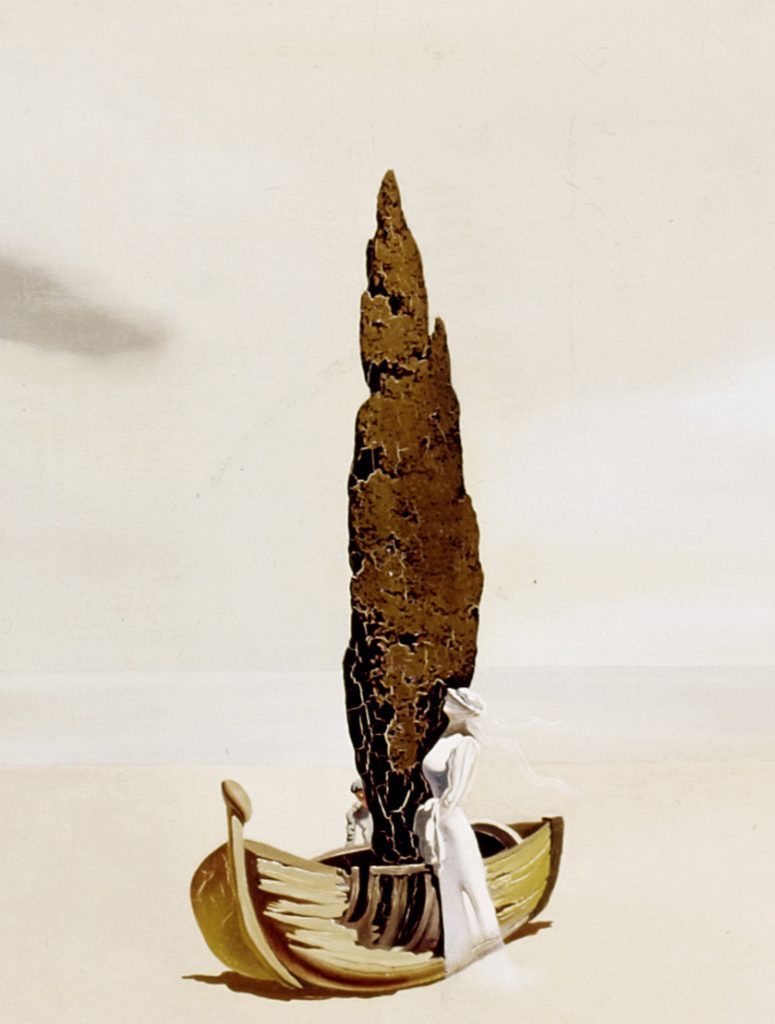
The Cypress Boat is an original and unique installation created by Salvador Dalí, composed of a boat and a cypress tree. It has become the symbol that identifies the Dalí House in Portlligat. When Dalí removes the boat from the water and transforms it into a sculptural work, it loses its original function and acquires a new meaning. The aim of the Conservation and Restoration team of the Dalí Foundation is to preserve the artist’s work created from an existing boat. Due to its exposure to the elements, a full restoration has been required and, for this purpose, the collaboration of the technicians from the Fishing Museum of Palamós and the master boatbuilder Andreu Casas has been sought.
A cypress that becomes the main mast
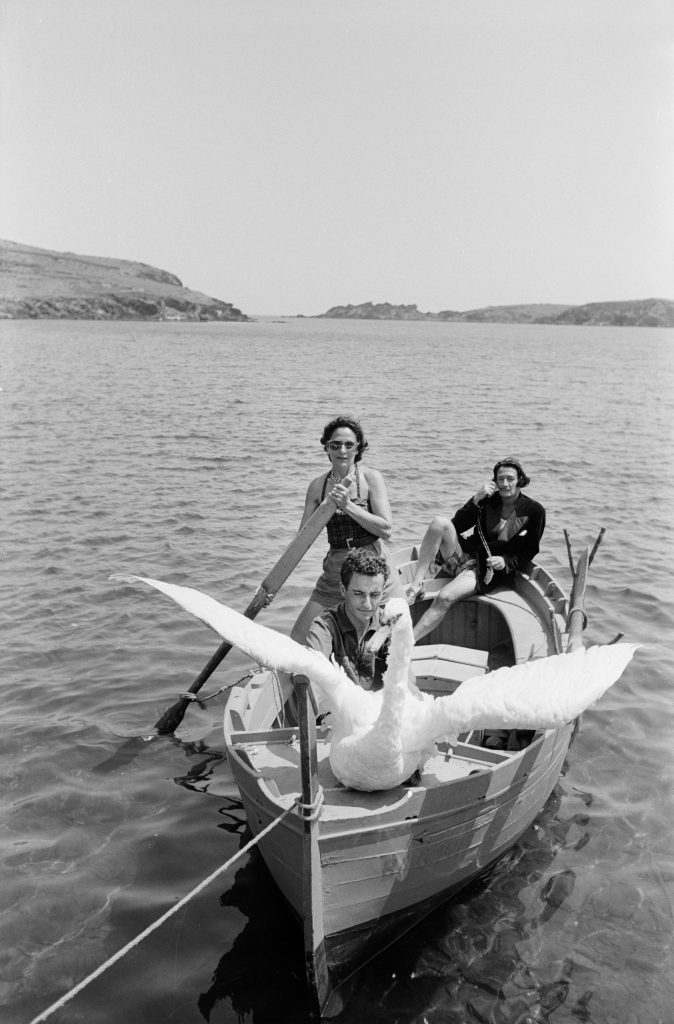
In maritime language, the main mast of a boat is known as a “tree”. As is often the case, Dalí proposes a play on double meanings: the tree-cypress and the tree-main mast. The Cypress-Boat lends a romantic atmosphere to the bay of Portlligat. At sunset, this place takes on a light that evokes The Isle of the Dead by Böcklin, a painting that fascinated the Surrealists. Captivated by Böcklin’s atmosphere, Dalí plants a cypress in the hull, thus transporting himself to his childhood in Empordà and to walks along Cape Creus with his wife Gala.
The challenge of restoring without altering its essence
From the dialogue between the Fishing Museum and the Dalí Foundation emerged a shared approach consisting of intervening as little as possible in the Dalinian work, in order to guarantee its stability without losing its essence, respecting the artist’s intention. Thanks to skilled hands and noble wood, the Cypress-Boat has regained its solidity. However, it should be noted that the cypress is alive and continues to grow and, therefore, the vessel carries increasingly more “sail.” Proportionally, the boat will become smaller and the rigging larger.
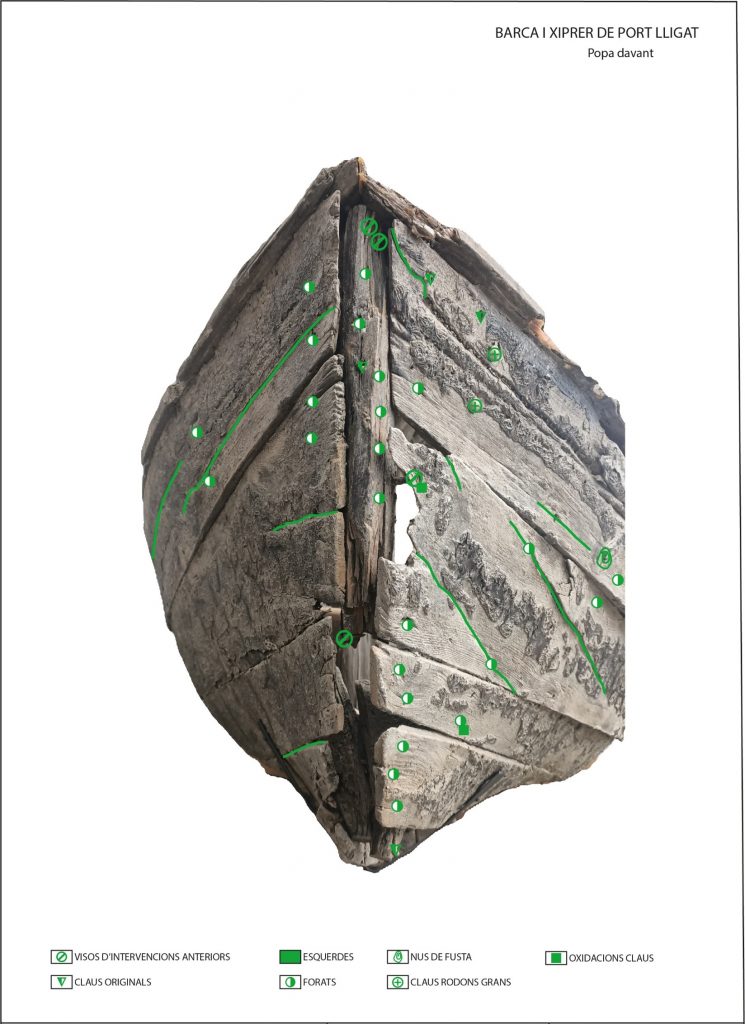
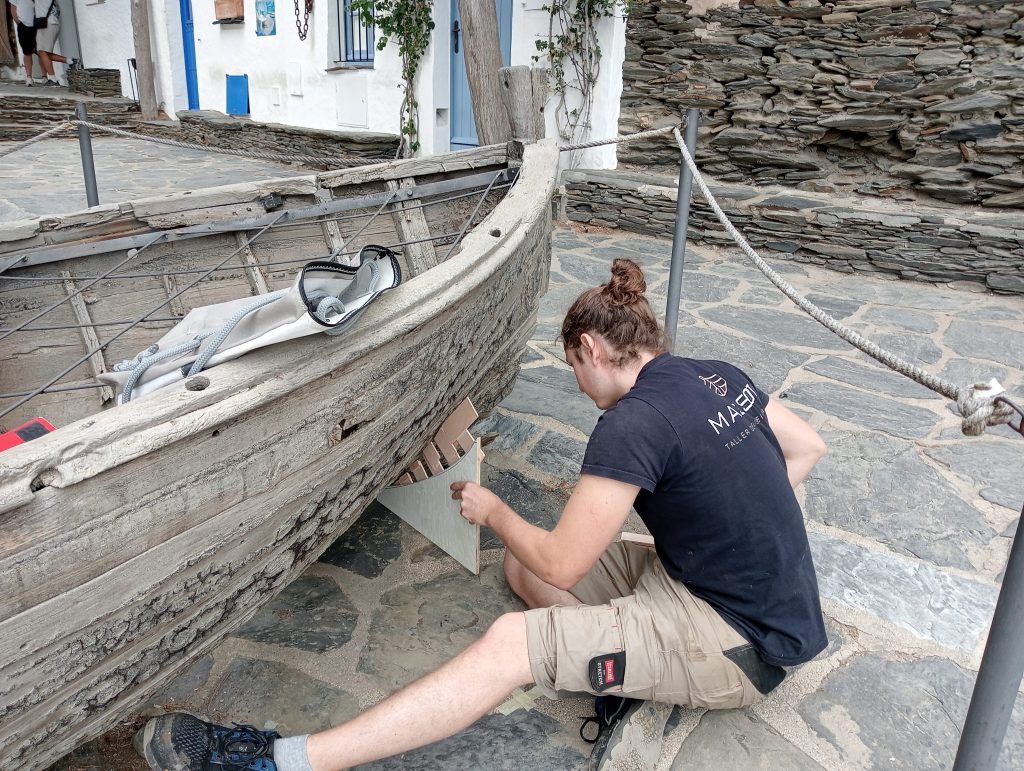
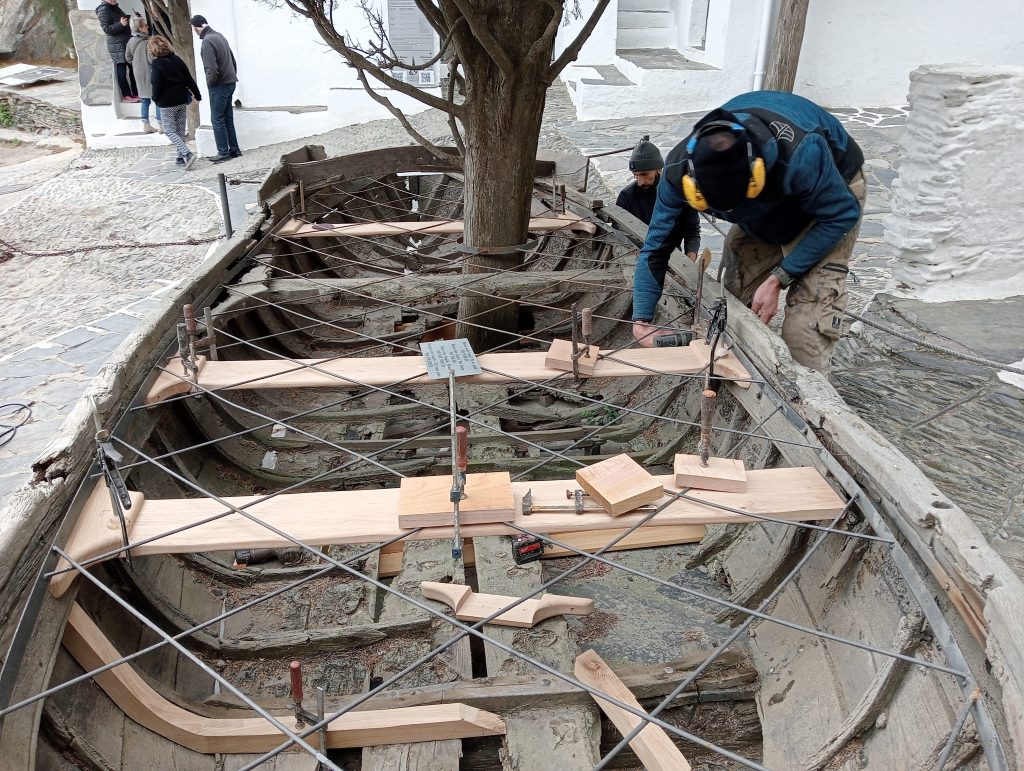
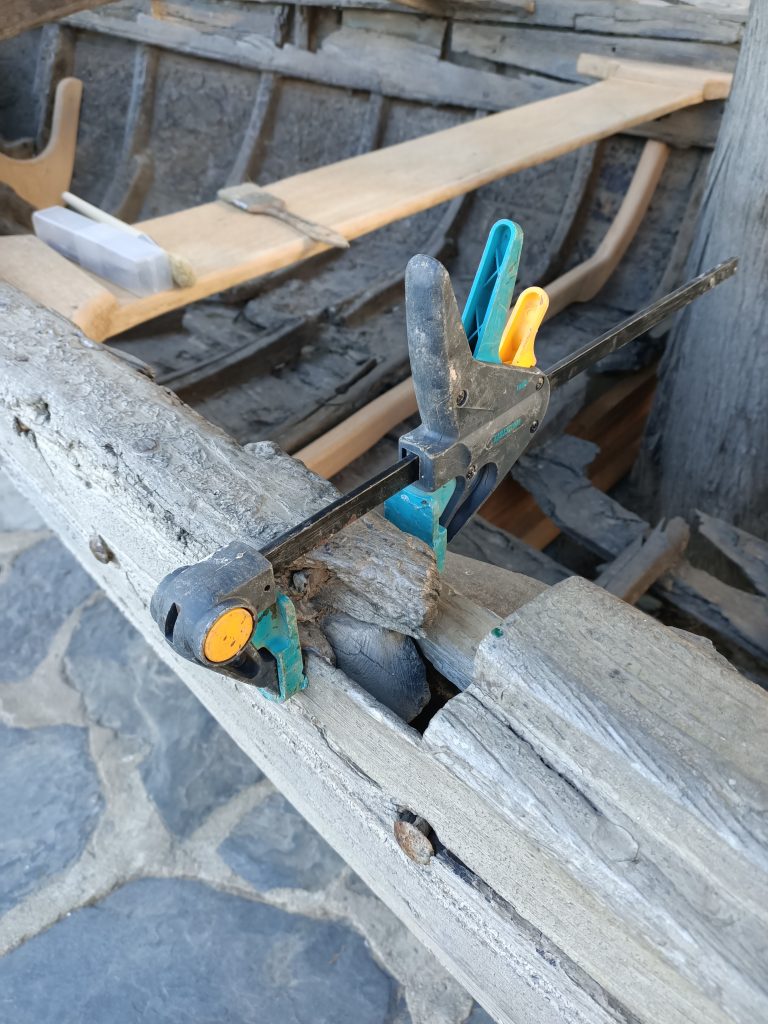
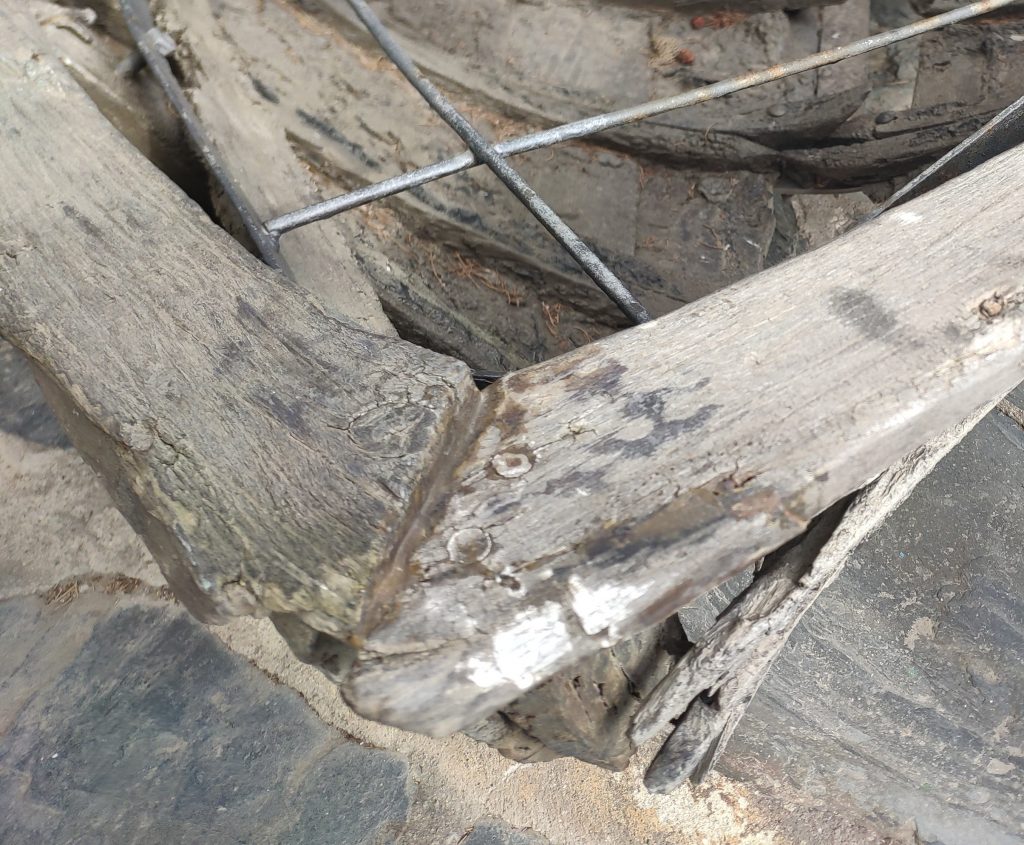
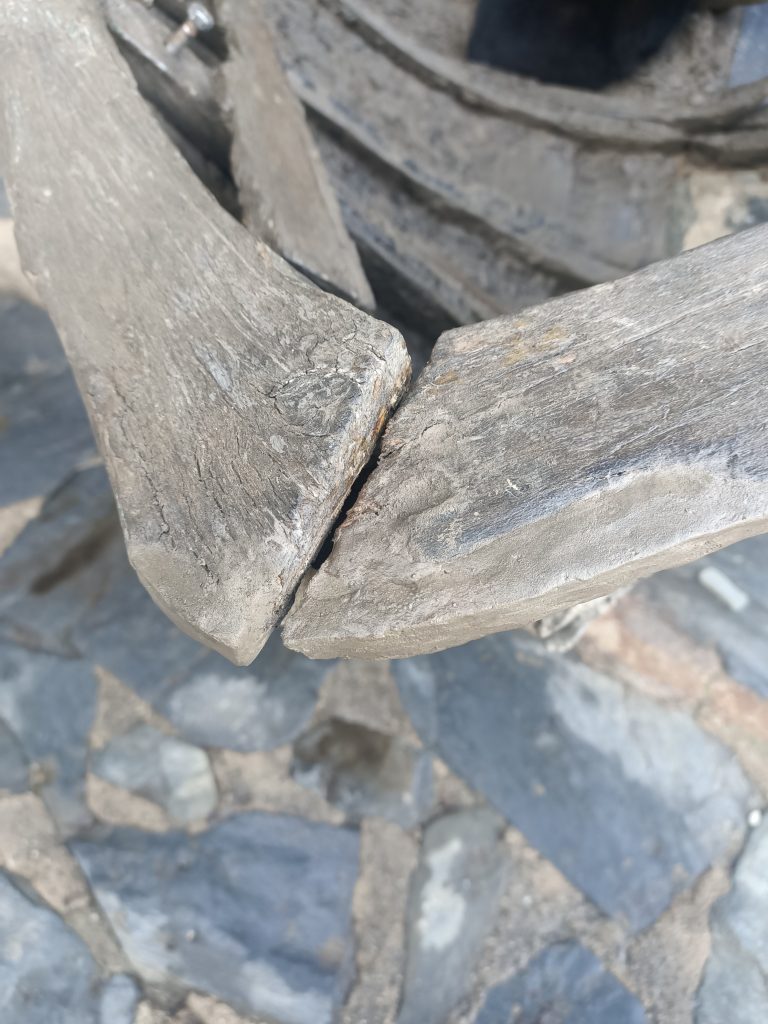
The restoration process consisted of three phases: (1) examination and documentation of alterations; (2) structural consolidation of the boat with the addition of new benches and frames and the replacement of the boat’s supports; beforehand, templates were made to replicate the damaged original pieces; (3) restoration and protection of the wood, with cleaning, consolidation and reintegration of broken fragments and, finally, protection of the wood with a finishing varnish.
Thanks to the collaboration between institutions, it has been possible for this fragment of the Mediterranean see to continue telling our story and that of two universal figures who made Portlligat their place in the world.