Description
- Number of catalogue raisonné OG:
- OG 012
- Owner:
- Spanish State
- Repository:
- Gala-Salvador Dalí Foundation
- Collection:
- Gala-Salvador Dalí Foundation, Figueres
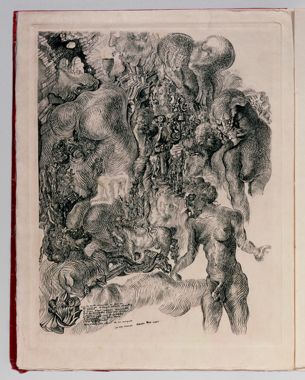
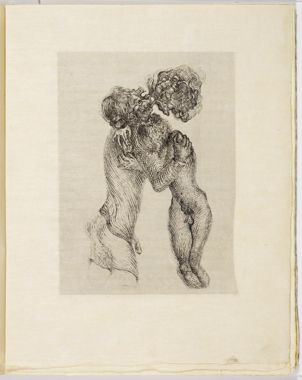
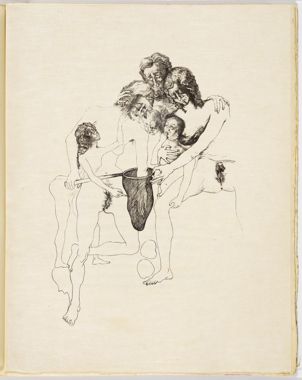
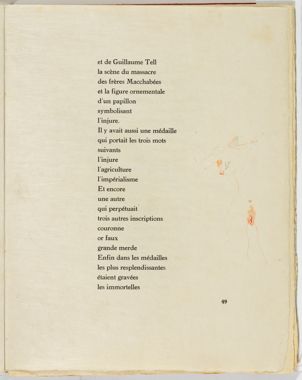
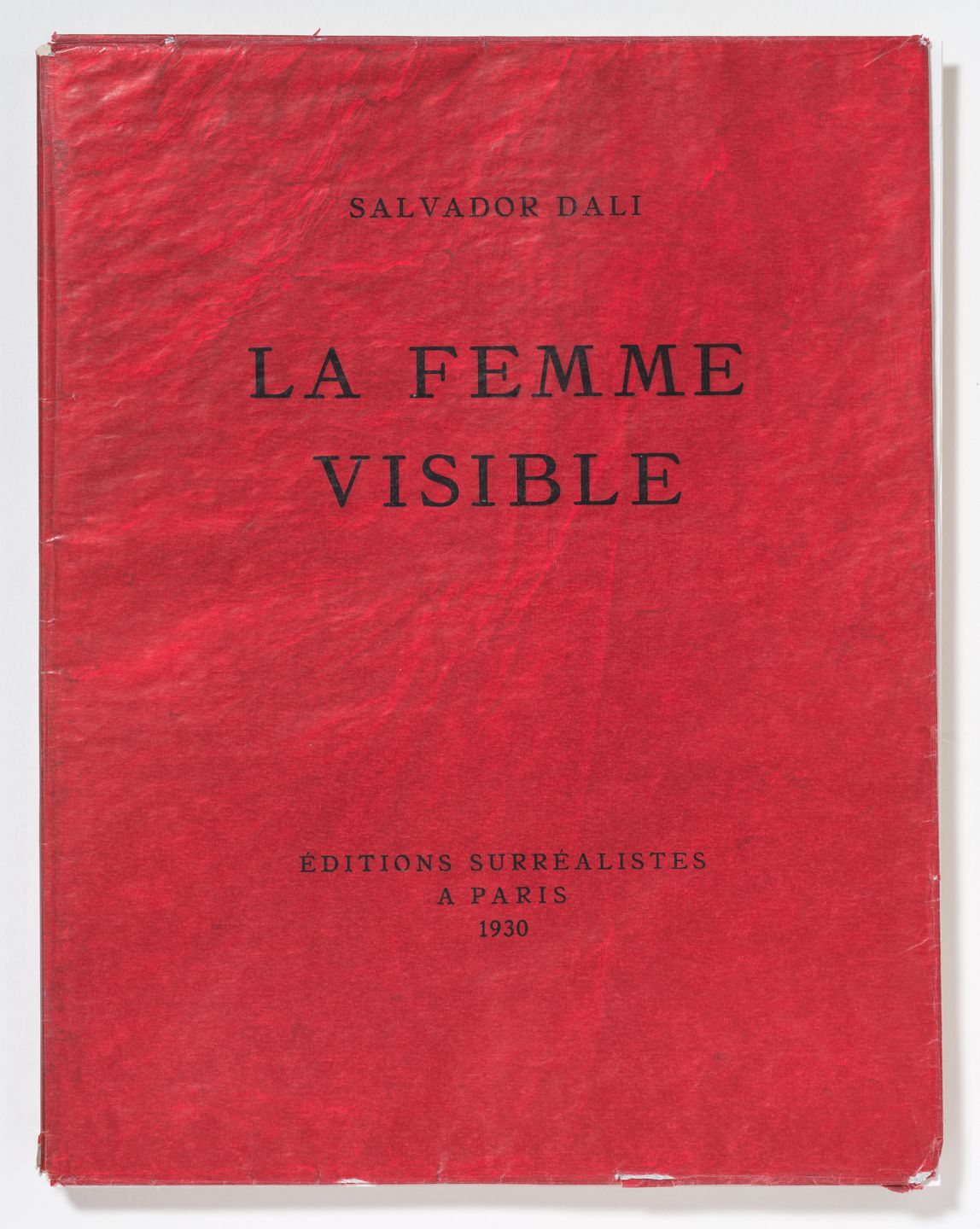
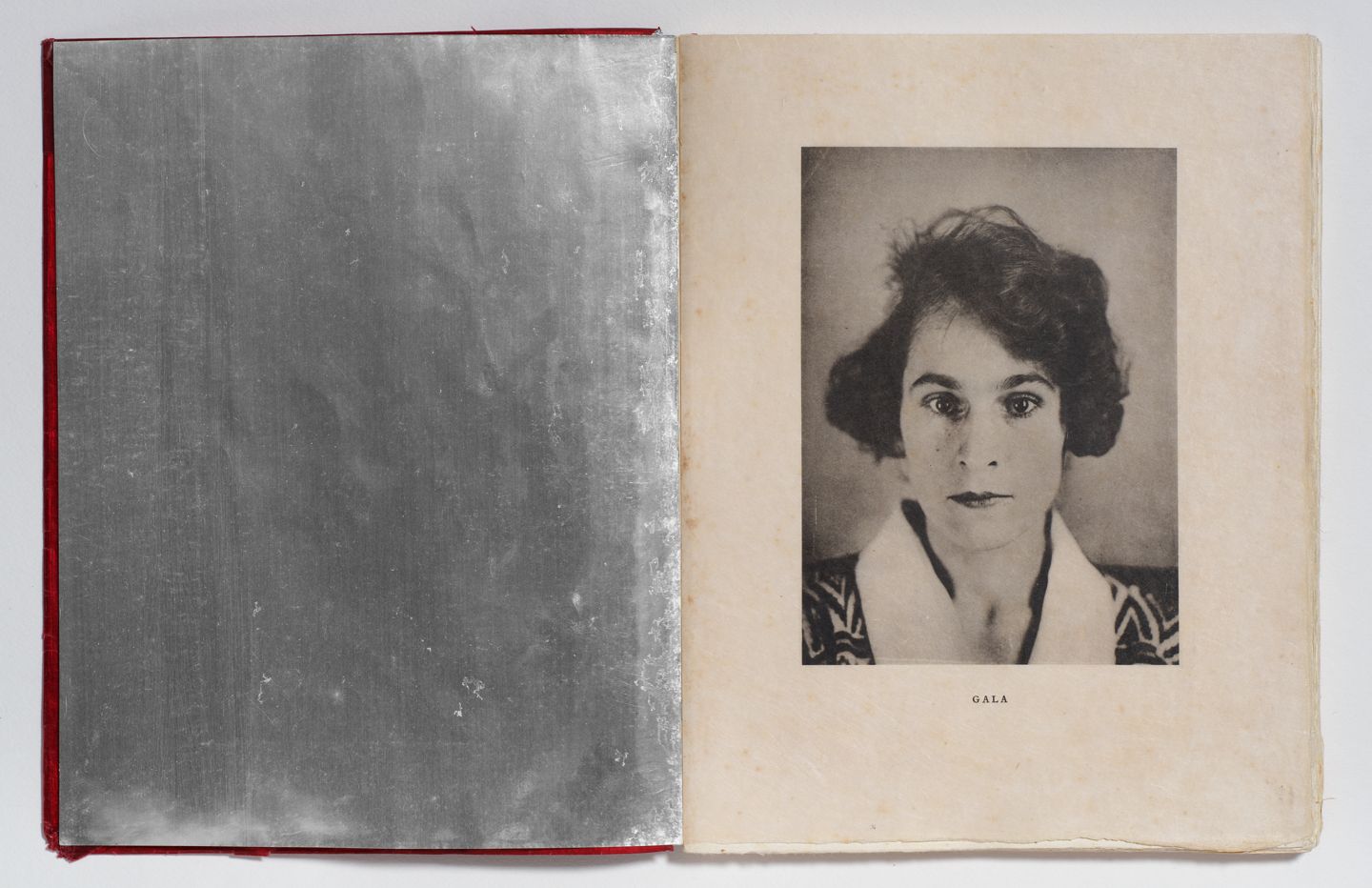
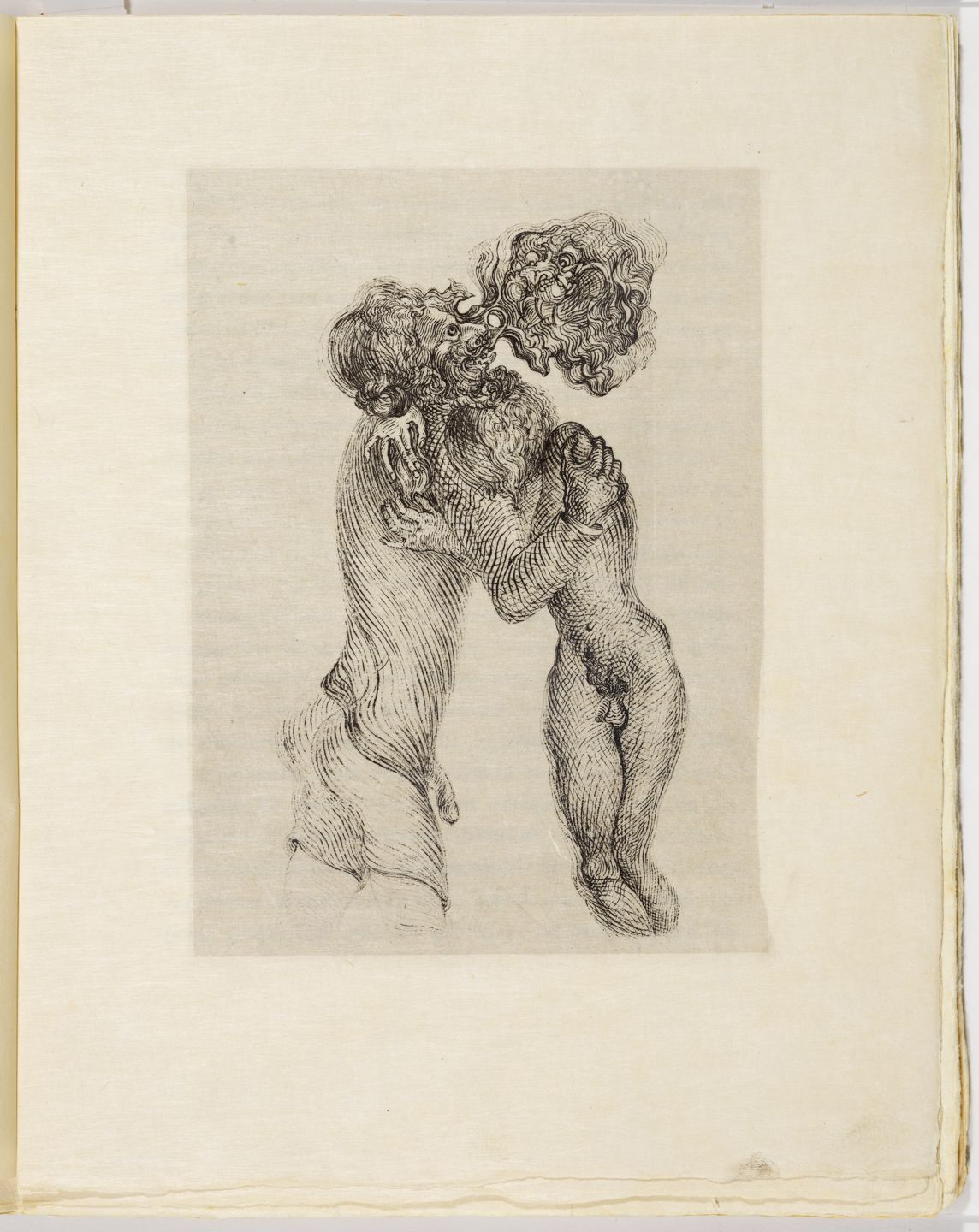
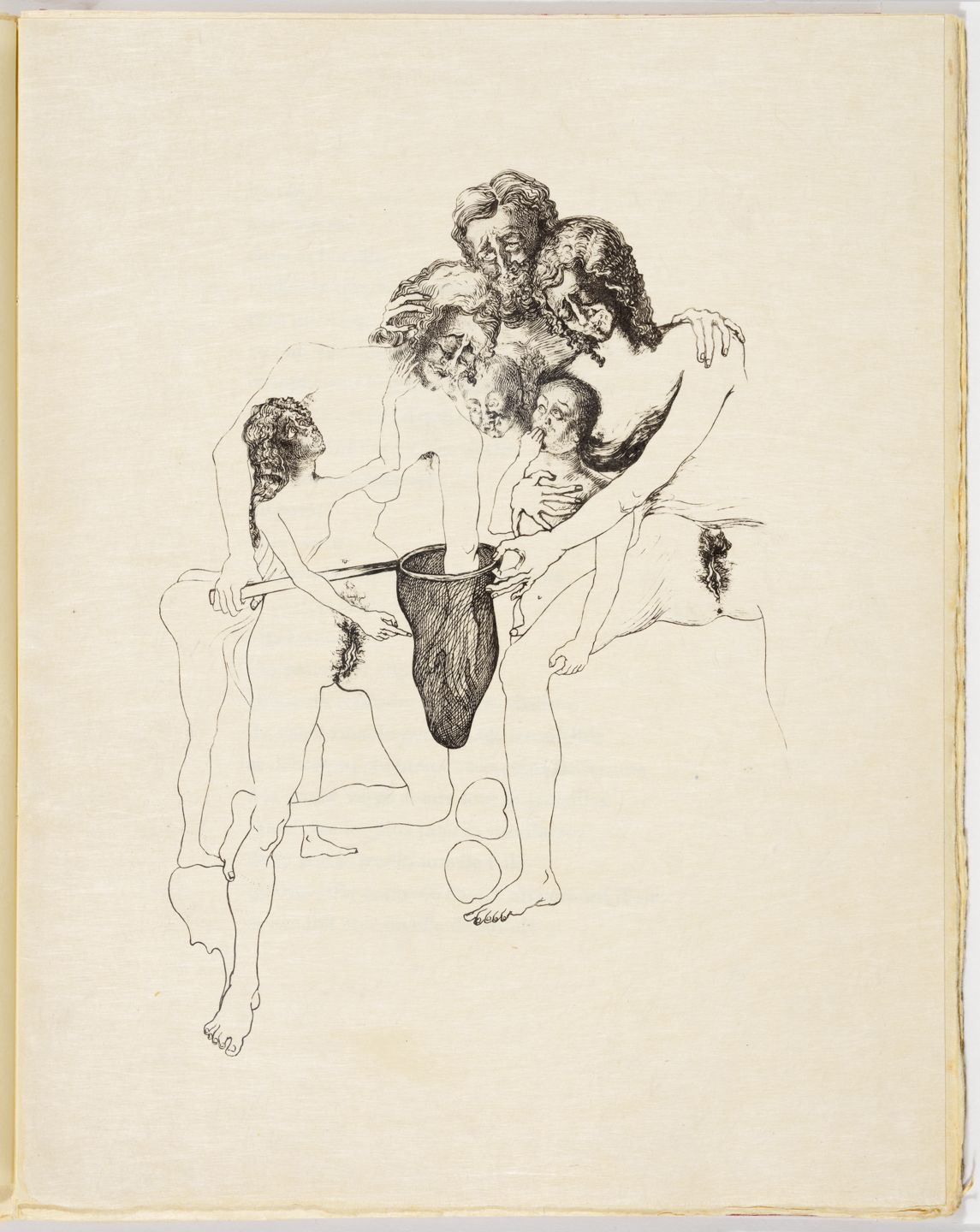
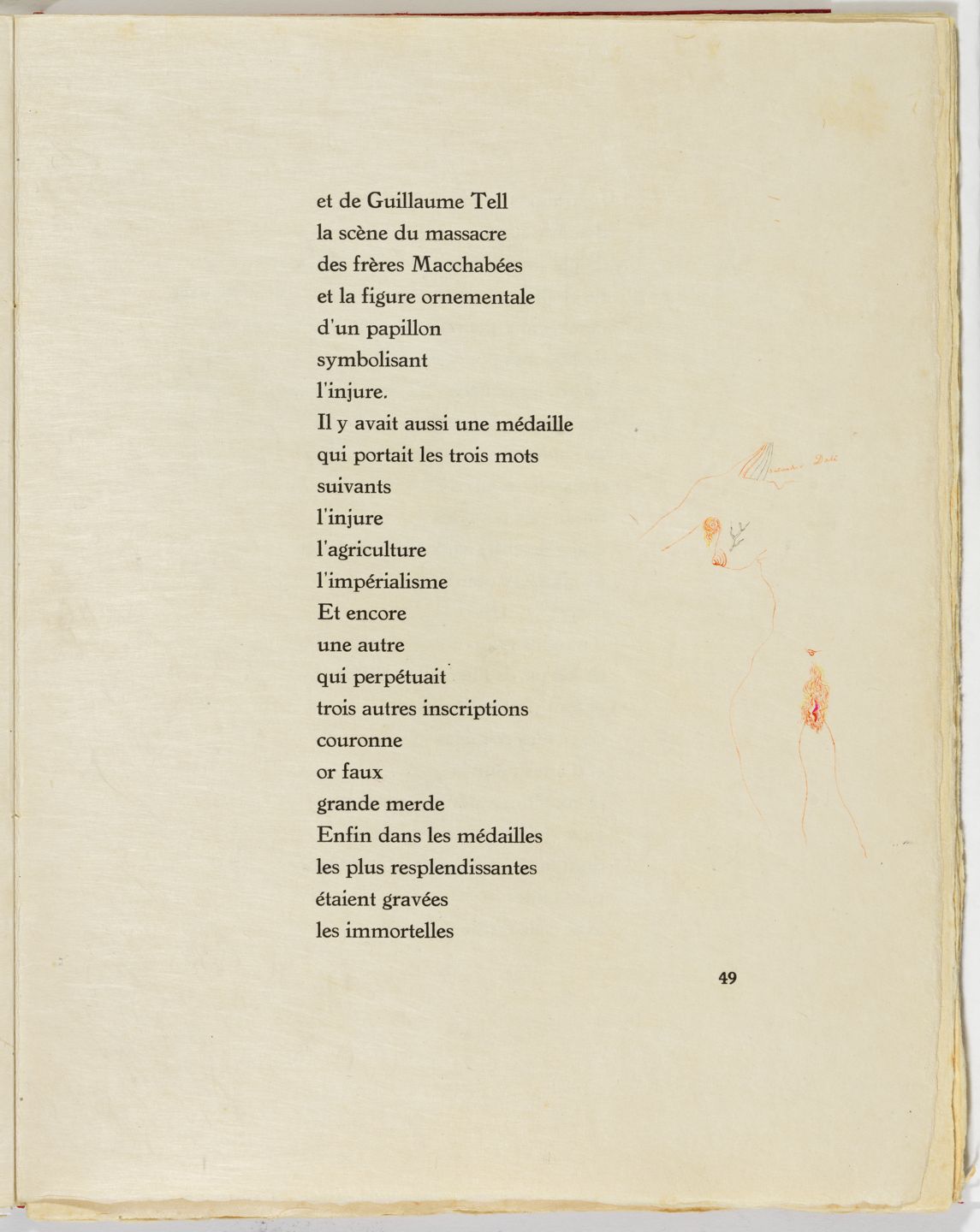
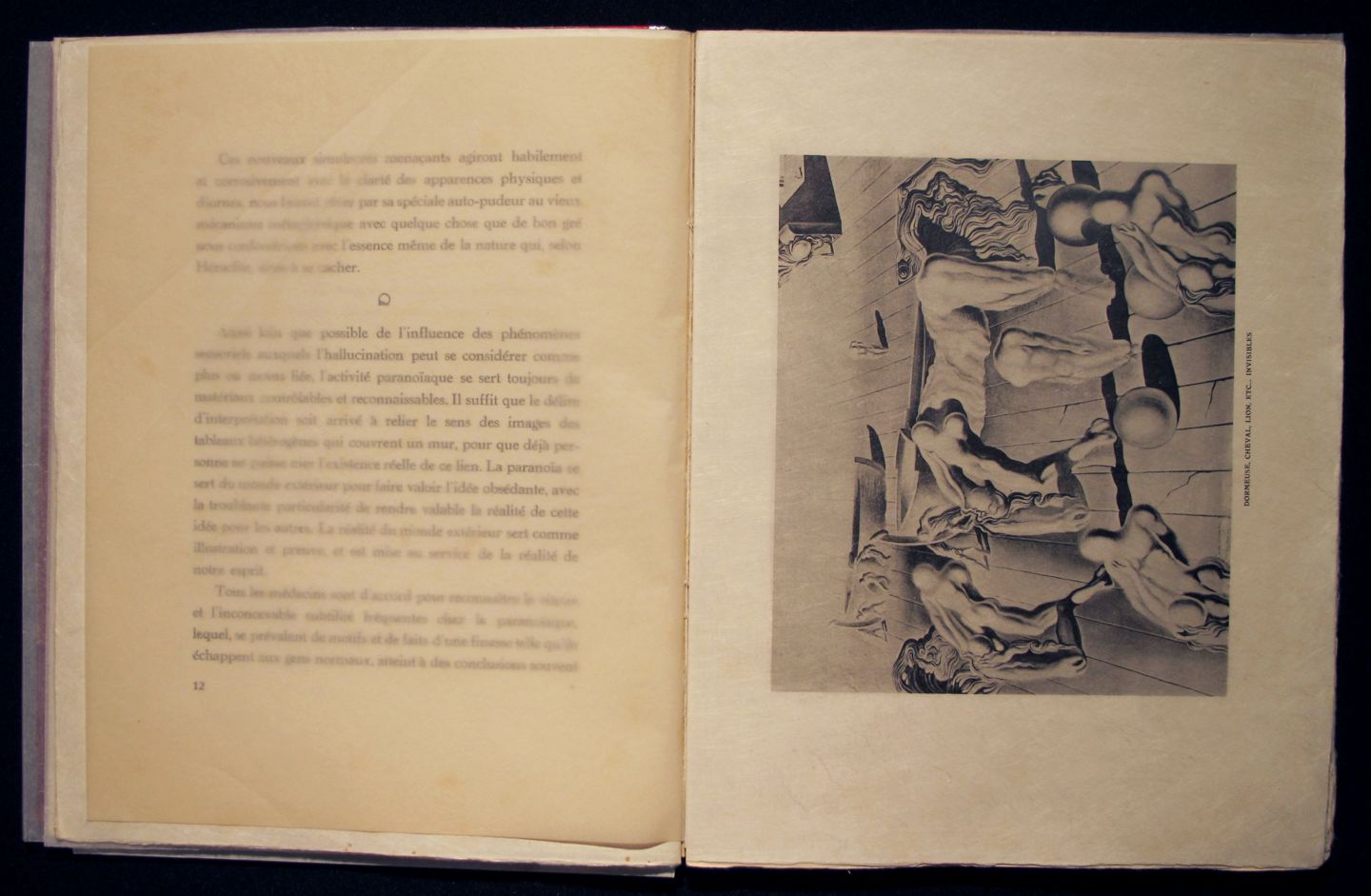
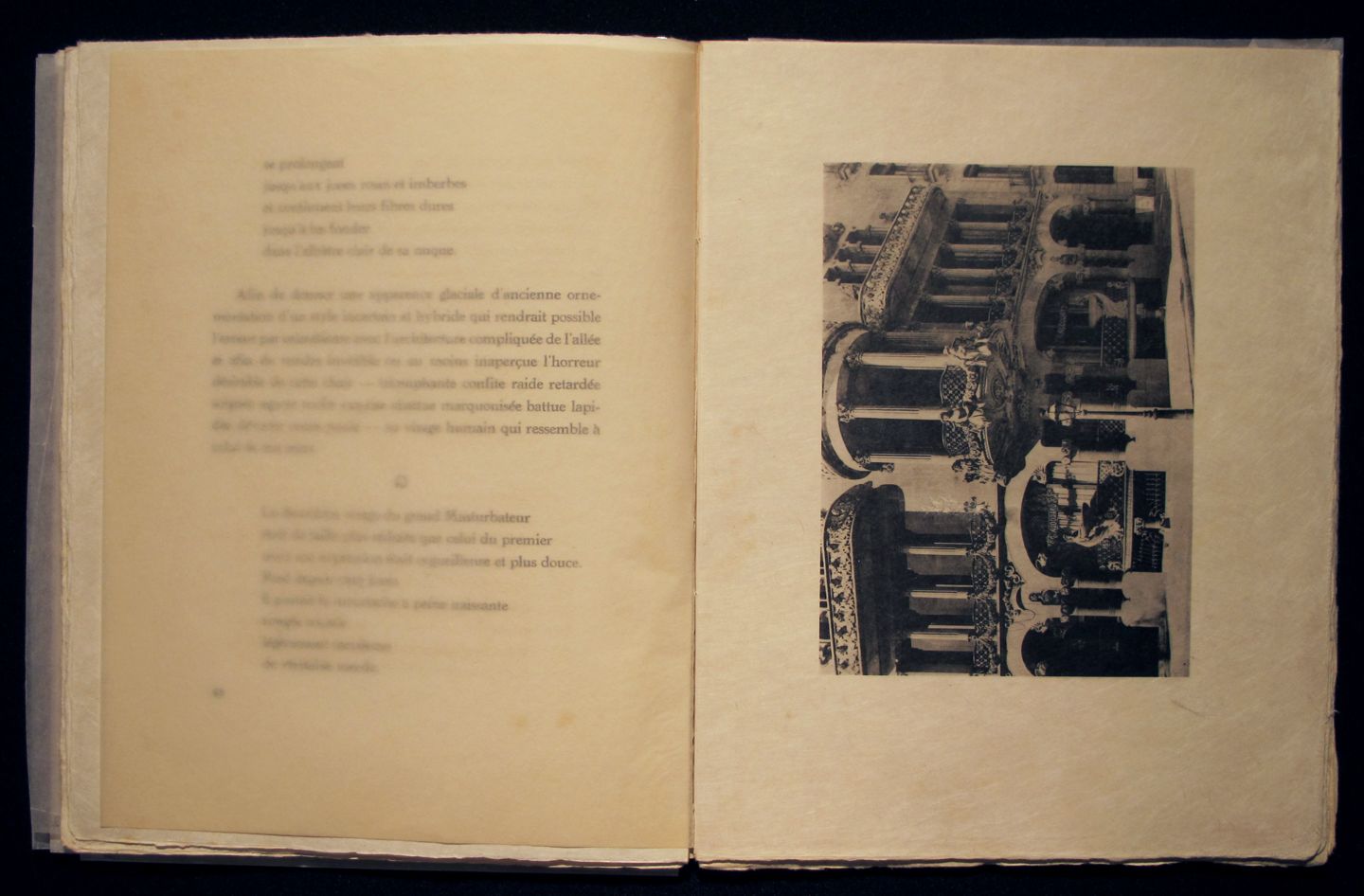
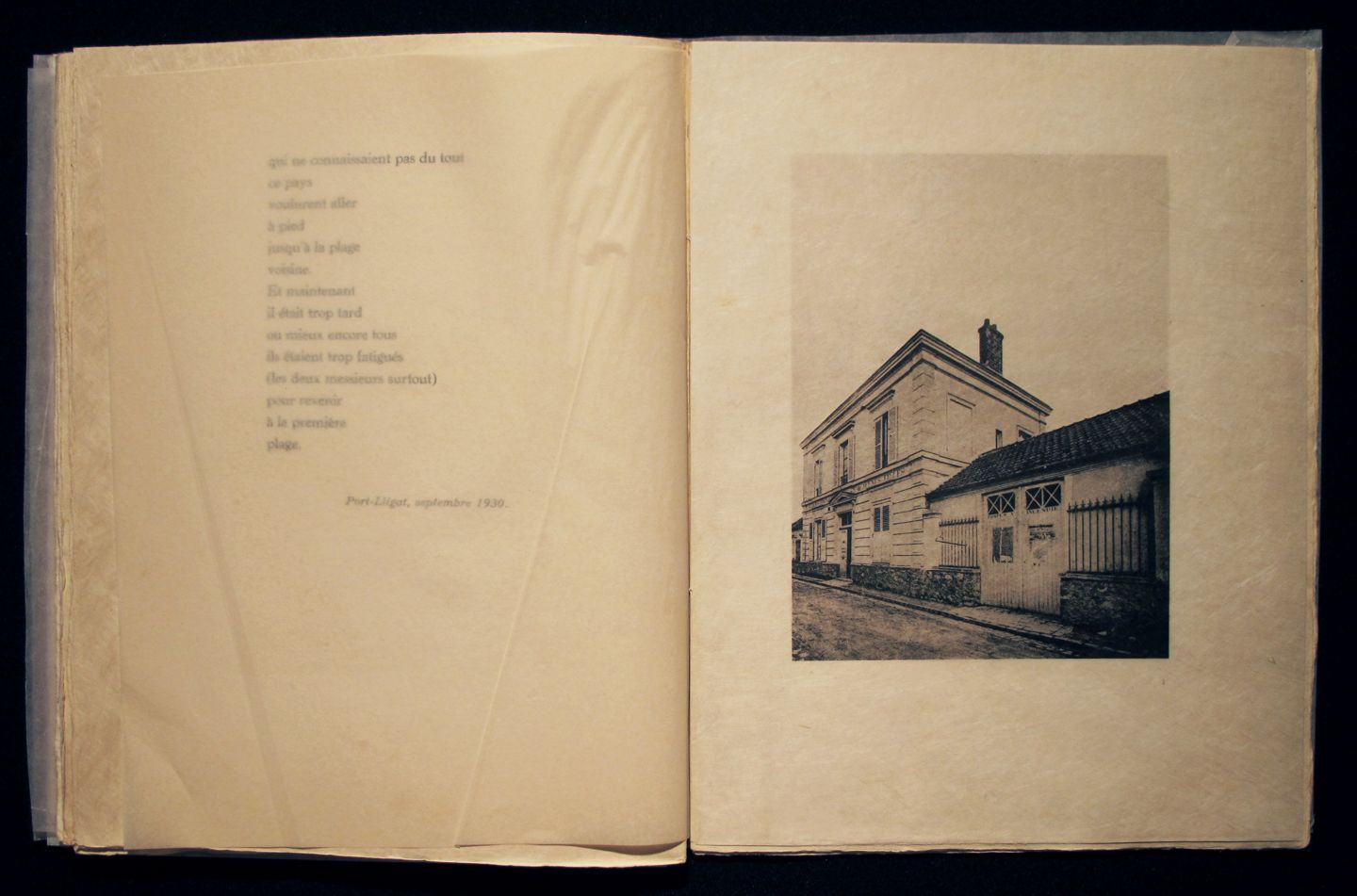
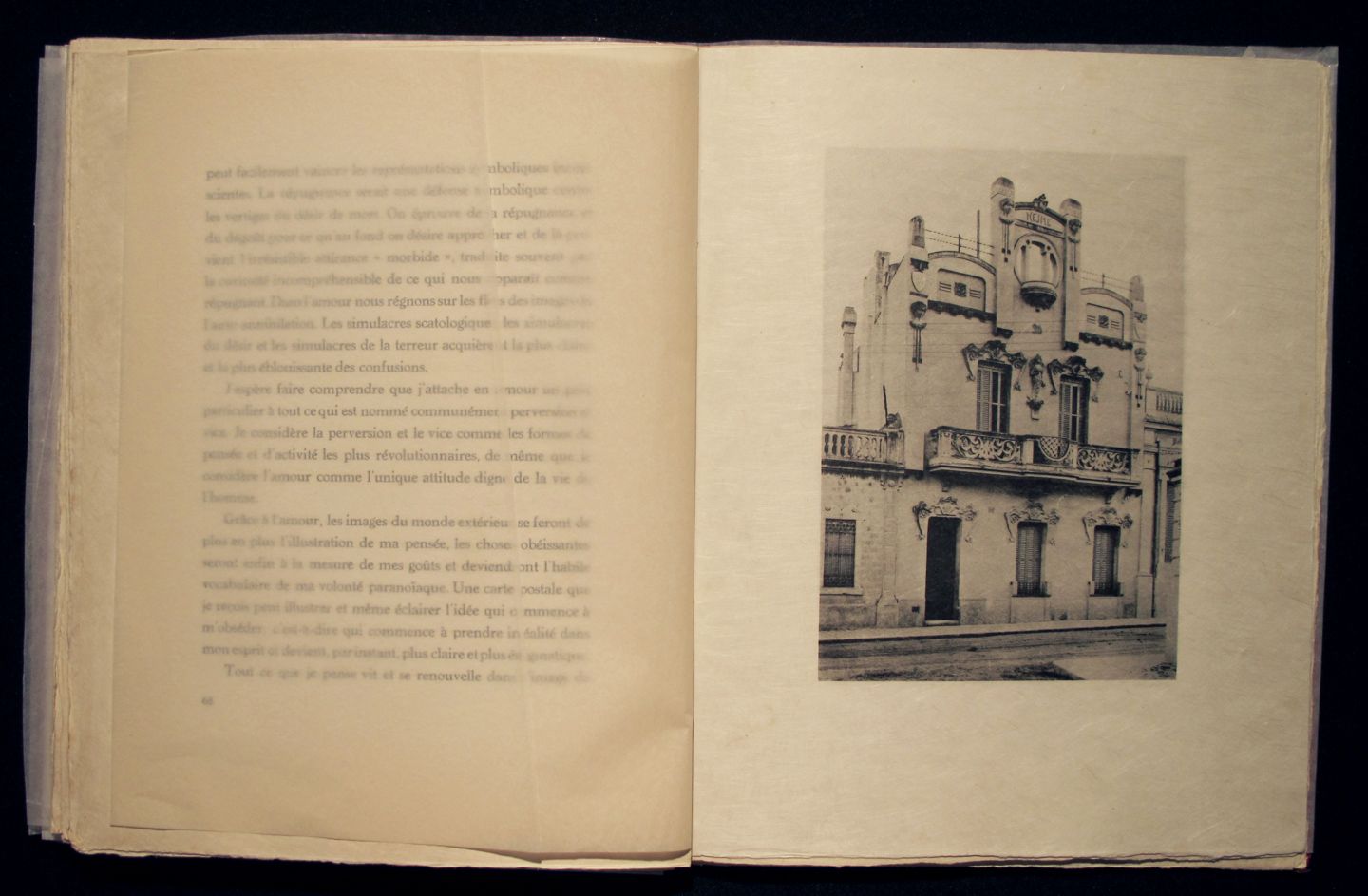
La Femme visible, Dalí’s first book, was published by Éditions Surréalistes in Paris in December 1930, when the artist was twenty-six years old. Dalí dedicated the work entirely to Gala Diakonova, who actively participated in its creation during a period of profound change, as the artist himself would later explain in The Secret Life of Salvador Dalí (1942).(1) The book is in step with the original editorial line of Éditions Surréalistes, a collective project of the Surrealist group launched in 1925. (2) The frontispiece, a heliogravure, is based on a pen and ink drawing by the artist. Both this print and the two phototype drawings – Grupo alegórico and La caza de mariposas – are closely related to the painting The Invisible Man, which Dalí began in 1929 and left unfinished. The frontispiece includes Dalí’s handwritten dedication to Gala, his muse, engraved directly onto the printing plate. In minuscule letters, it quotes lines from his poem ‘The Great Masturbator’: ‘[…] in the cruel ornaments of false gold / that cover her soft and delicate breasts / and imitate / the form of an imperial crown / whose fine leaves of bronzed acanthus / extend / to her pink and beardless cheeks / and continue their hard fibres / until they melt / into the clear alabaster of her nape / for Gala Diacanova Salvador Dalí 1930’. (3) As yet unverified documentation indicates that the frontispiece was printed by Roger Lacourière, (4) while the book itself was printed by the Ducros et Colas printing house in Paris. (5) Each of the first ten copies, printed on pearlescent Japanese paper, includes an original ink drawing by the artist in the margin of one of the pages. The theoretical texts – ‘The Rotting Donkey’, ‘The Sanitary Goat’, ‘Love’ – and the poem ‘The Great Masturbator’ were written during 1930.(6) In ‘The Rotting Donkey’, previously published in the first issue of Le Surréalisme au service de la révolution in July of that year, Dalí expounds his paranoiac-critical theory: ‘I believe that the time is near when, by a process of active paranoid thought, it will be possible (simultaneously with automatism and other passive states) to systematise confusion and contribute to the total discrediting of the world of reality. Not only will the new simulacra that paranoiac thought can suddenly cause to appear originate in the unconscious, but the force of paranoiac power will be placed at its service’. (7) The book also includes five additional illustrations: a photograph of Gala taken by Man Ray in 1925; an oil painting by Dalí from 1930, Invisible Sleeping Woman, Horse, Lion [Cat. P. 378]; and three photographs of buildings. Of these last, two Modernista buildings are still standing: Casa Lleó Morera, on Passeig de Gràcia in Barcelona, designed by Lluís Domènech i Montaner, and Casa Geli Vergés, by the architect Antonio Alcaide, at number 58 Carrer Sant Llàtzer in Figueres. __________ (1) Dalí, S., The Secret Life of Salvador Dalí, New York, Dial Press, 1942, p. 250. (2) Sebbag, G., Les Éditions surréalistes : 1926-1968, Paris, Institut Mémoires de l’édition contemporaine, 1993, p. 7. (3) ‘[…] dans les cruels ornements en faux or / qui recoubrent [sic] ses tempes delicates et molles / en imitant/ la forme d'une courone imperialle / dont les fines feuilles d'acante bronzé / se prolongent /jusqu'aux joues roses et imberbes / et continuant ses fibres dures / jusqu’à se fondre / dans l'alabastre claire de sa nuque / pour Gala Diacanova Salvador Dalí 1930.’ (4) Michler, R., L.W. Löpsinger, Catalogue Raisonné of Etchings and Mixed-Media Prints 1924-1980, Munich, Prestel-Verlag, 1994, p. 126. (5) La Femme visible, ‘Épreuves ou tirage non relié d’un texte de Salvador Dali publié aux Éditions surréalistes en 1930’, © Association Atelier André Breton 2005 - 2022. La Femme visible (André Breton) (andrebreton.fr). Last accessed 31.08.2023. (6) ‘L’Âne Pourri’, ‘La Chèvre Sanitaire’, ‘Le Grand Masturbateur’ and ‘L’Amour’, in the order adopted in the book. (7) ‘Je crois qu’est proche le moment où, par un processus de caractère paranoïaque et actif de la pensé, il sera possible (simultanément à l’automatisme et autres états passifs) de systématiser la confusion et de contribuer au discrédit total du monde de la réalité. Les nouveaux simulacres que la pensé paranoïaque peut subitement faire apparaître, non seulement auront leur origine dans l’inconscient, mais aussi la forcé du pouvoir paranoïaque sera mise au Service de celui-ci.
- Original title:
- La Femme Visible
- Publication title:
- La Femme Visible
- Series:
- LA FEMME VISIBLE
- Distinctive features:
- Copy No. 4
- Physical description:
- Book with print (frontispiece)
- Production type:
- Individual limited edition original work - Original limited edition
- Print Author :
- Salvador Dalí i Domènech
- Author of the publication :
- Salvador Dalí i Domènech
- Editor:
- Éditions Surréalistes
- Printer :
- Roger Lacourière, Ducros et Colas
- Production date:
- 15-12-1930
- Copy number:
- 4
- Production location:
- Paris, France
- Observations on production:
- Total: 204 copies Printing: 1- 10 pearlescent Japan paper with an original drawing by the author in the margin 11- 30 'Hollande' 31- 40 Ingres (pink) 41- 175 Arches 4 copies Hors Commerce for the author and his friends in pearlescent Japan paper and 25 copies Arches A- Z (sic)
- Object history:
- Artist's collection
Related historical documentation
- Lo Duca, A history of eroticism, Jean-Jacques Pauvert, Paris, 1961, 194
- Salvador Dalí (il.), Dalí et les poètes, Filipacchi, Paris, 1971, 13
- Robert Descharnes, Salvador Dalí, Nouvelles Editions Françaises, Paris, 1973, 50
- Salvador Dalí: rétrospective, 1920-1980, Centre Georges Pompidou, Musée National d'Art moderne, Paris, 1979, 136
- La Vie publique de Salvador Dalí, Centre Georges Pompidou, Musée National d'Art moderne, Paris, 1980, 25
- Salvador Dalí: retrospektive, 1920-1980, Prestel, München, 1980, 421
- Dalí e i libri, Generalitat de Catalunya. Departament de Cultura i Mitjans de Comunicació, [Barcelona], 1982, 14
- Dalí i els llibres, Generalitat de Catalunya. Departament de Cultura., Barcelona, 1982, 30
- 400 obras de Salvador Dalí de 1914 a 1983, Obra Cultural de la Caixa de Pensions, [Madrid], 1983, 93
- 400 obres de Salvador Dalí del 1914 al 1983, Obra Cultural de la Caixa de Pensions, [Madrid], 1983, 93
- Dalí und die Bücher, Generalitat de Catalunya. Departament de Cultura., [Barcelona], 1983, 16
- Robert Descharnes, Dalí : la obra y el hombre, Tusquets / Edita, Lausanne, Barcelona, 1984, 105
- Dalí y los libros, Mediterrània, [Barcelona], 1985, 26
- Whitney Chadwick, Les Femmes dans le mouvement surréaliste, Chêne, Paris, 1986, 38
- Salvador Dalí, 1904-1989, Gerd Hatje, Stuttgart, 1989, 415
- Dalí a knihy, Generalitat de Catalunya. Departament de Cultura., Mediterrània, Barcelona, 1992, 14
- Mason, Rainer Michael, Dalí verdadero / grabado falso : la obra impresa 1930-1934, IVAM. Centre Julio González, València, 1992, 13
- Paul, Max et les autres : Paul Eluard et les surréalistes, L'Albaron, Musée d'Art et d´Histoire, Thonon-les-Bains [Haute-Savoie], Saint-Denis, 1993, 66
- Georges Sebbag, Les Éditions surréalistes : 1926-1968, Institut Mémoires de l'édition contemporaine, Paris, 1993, p.65
- Dalí joven, 1918-1930, Museo Nacional Centro de Arte Reina Sofía, [Madrid], 1994, 43
- Salvador Dalí, catalogue raisonné of etchings and mixed-media prints 1924-1980, Prestel, Munich, 1994, 30, p.126
- Salvador Dalí: the early years, South Bank Centre, [London], 1994, 48
- Robert Descharnes, Gilles Néret, Salvador Dalí, 1904 -1989, Benedikt Taschen, Köln, 1994, 145
- Dalí, els anys joves : 1918-1930, Generalitat de Catalunya. Departament de Cultura., Fundació Gala-Salvador Dalí, Figueres, [Barcelona], 1995, 43, p.250
- Cento libri surrealisti, Centro Di, Firenze, 1996, 87
- Albert Field, The Official catalog of the graphic works of Salvador Dalí, The Salvador Dalí Archives, New York, 1996, 15
- Ralf Schiebler, Dalí : genius, obsession and lust, Prestel, Munich - New York, 1996, 53
- ADLAN i el circ frediani (jocs icaris), Patronat Municipal de Cultura de Mataró, Mataró, 1997, 79
- Le Surréalisme et l'amour, Gallimard / Electa, Paris-Musées, Paris, [París], [S.l.], 1997, 57
- Surrealist prints, Harry N. Abrams, New York, 1997, 25
- Dawn Ades, Fiona Bradley, Salvador Dalí: a mythology, Tate Gallery Publishing, London, 1998, 43
- Surrealism: two private eyes, the Nesuhi Ertegun and Daniel Filipacchi collections, Guggenheim Museum Publications, New York, 1999, 456-459
- Fèlix Fanés, Salvador Dalí, la construcción de la imagen : 1925-1930, Electa, [Madrid], 1999, 173
- Dalí il·lustrador : Salvador Dalí, 1904-1989, Govern d'Andorra. Ministeri de Turisme i Cultura, Andorra, 2001, 68
- Surrealism desire unbound, Tate Publishing, London, 2001, 149
- La Révolution surréaliste, Éditions du Centre Pompidou, Paris, 2002, 65, p. 191
- Surrealismus 1919 - 1944 : Dalí, Max Ernst, Magritte, Miró, Picasso..., K20 Kunstsammlung Nordrhein-Westfalen, Hatje Cantz, Ostfildern-Ruit, Düsseldorf, 2002, 65
- Jean-Louis Gaillemin, Salvador Dalí : désirs inassouvis du purisme au surréalisme, 1925-1935, La Passage, Paris-New York, 2002, il. 42, il. 43
- Laia Rosa Armengol, Dalí, icono y personaje, Cátedra, Madrid, 2003, 185
- Dalí. Cultura de masses, Fundació La Caixa, Fundació Gala-Salvador Dalí, Figueres, Barcelona, 2004, 20
- Dalí : afinidades electivas, Generalitat de Catalunya. Departament de Cultura., Barcelona, 2004, 452, p. 454
- Dalí : afinitats electives, Generalitat de Catalunya. Departament de Cultura., Barcelona, 2004, 452, p. 454
- Dalí, Bompiani, [Milà], 2004, 136
- Dalí una vida de llibre = Dalí a life in books, Destino [etc.], Barcelona, 2004, 118
- Les Mots et les images, Ceuleers & Van de Velde Booksellers, Antwerpen, 2004, il. 73
- Juan José Lahuerta, El Fenómeno del éxtasis, Siruela, Madrid, 2004, 105
- Dalí, Rizzoli, New York, 2005, 136
- It's all Dalí, Museum Boijmans Van Beuningen, Rotterdam, 2005, 20
- Montse Aguer i Teixidor, Dallibres, Distribucions d'Art Surrealista, [Figueres], 2005, 118-119
- Dalís medienspiele: falsche fährten und paranoische selbstinszenierungen in den künsten, Transcript, Bielefeld, 2007, 166
- Surrealism and beyond in the Israel museum, The Israel Museum, Jerusalem, 2007, 223
- Montse Aguer i Teixidor, Juan José Lahuerta, Salvador Dalí and the magazines, Distribucions d'Art Surrealista, [Figueres], 2008, 73
- Astrid Ruffa, Dalí et le dynamisme des formes : l'élaboration de l'activité "paranoïaque-critique" dans le contexte socioculturel des années 1920-1930, Les Presses du réel, France, 2009, 206
- Salvador Dalí, La Femme visible : La Dona visible, Fundació Gala-Salvador Dalí, Edicions i Propostes Culturals Andana, Figueres, Vilafranca del Penedés, 2011, s.p.
- Salvador Dalí, Set cartes de Dalí a Pere Coromines, Associació de Bibliòfils, Barcelona, 2014, s.n.
-

Rostre del Gran Masturbador
1929
-

L'home invisible
1929-32
-

La memòria de la dona-infant
1929
-

El joc lúgubre
1929
-

Retrat de Paul Éluard
1929
-

La profanació de l'hòstia
c. 1930
-

Dorment cavall lleó invisibles
1930
-

Sense títol
1930s
-

Sense títol
c. 1930s
The copyright on Salvador Dalí's works, included those that are reproduced in this Web page, is held by the Spanish State and has been granted in exclusivity to the Fundació Gala-Salvador Dalí.
Pursuant to intellectual property laws in force, the total or partial reproduction, distribution, transformation, public communication, interactively making available to the public, as well as any other exploitation, by any means, of the works included in this Web page is prohibited.
Any exploitation of Salvador Dalí's works is subject to the prior application and clearance of the relevant licence issued by VEGAP (tel. 91 532 66 32 and 93 201 03 31 ; www.vegap.es). Copyright infringement will be prosecuted according to Laws.