- Place:
-
Dalí Theatre-Museum
- Typology:
- Activity
- Price:
- Free entrance with reservation
First lecture in the programme of activities accompanying the exhibition Dalí and Optical Illusions at the Dalí Theatre-Museum
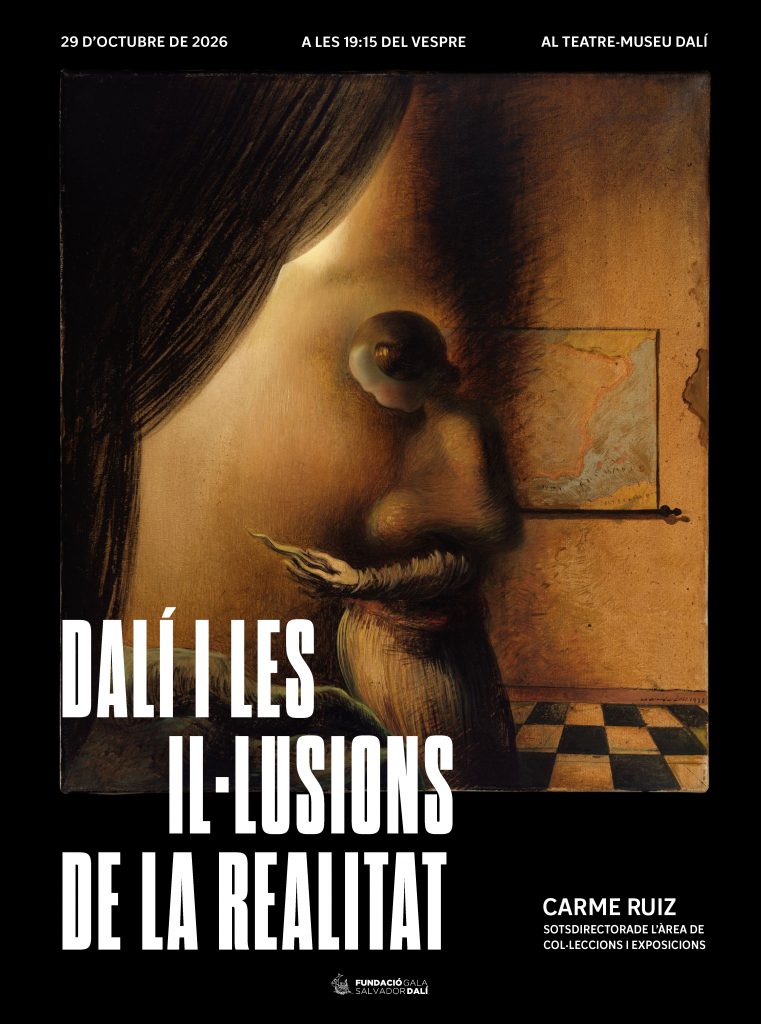
Optical illusions occupy a central place in Salvador Dalí’s work. Fascinated by the mechanisms of perception and the scientific discoveries of his time, the artist explored double images, anamorphoses, stereoscopy, anaglyphs and holograms to challenge the way we construct reality. This lecture offers a journey through the works featured in the exhibition Dalí’s Optical Illusions and invites visitors to discover how the artist transformed the act of looking into a veritable laboratory for experimentation.
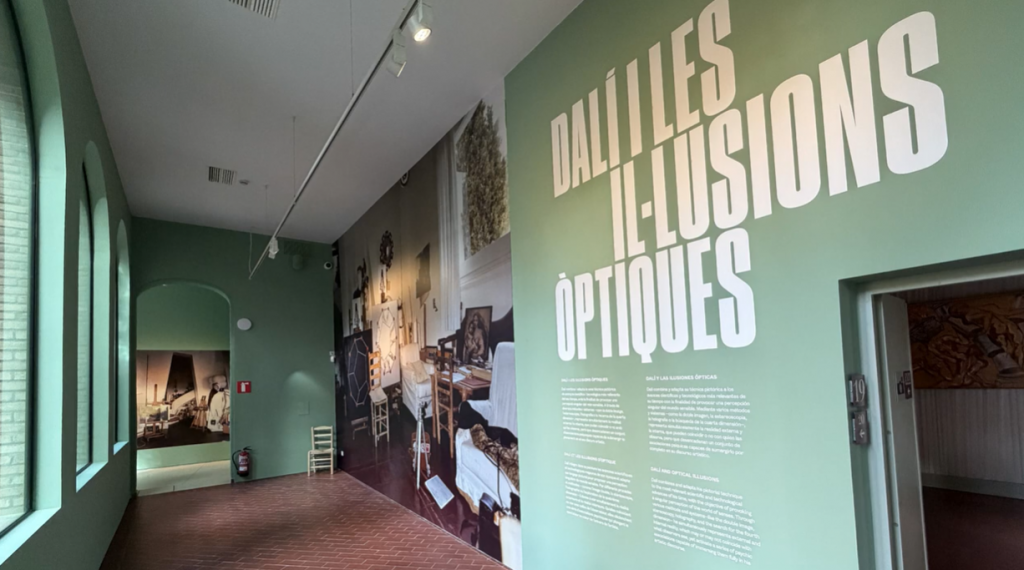
The lecture by Carme Ruiz, Deputy Director of the Collection and Exibitions Departament, will kick off the programme of accompanying activities for the exhibition Dalí and Optical Illusions at the Dalí Theatre-Museum. The exhibition brings together eleven works from the museum’s permanent collection, presenting them in the context of the 1970s, a period when the artist was working intensively on the creation of what would become the Dalí Theatre-Museum. This phase was marked by research and experimentation with a range of optical techniques, as Dalí sought to explore new ways of understanding and representing reality.
From as early as the 1920s, Salvador Dalí’s work was characterised by enigmatic images that altered the perception of reality and awakened hidden meanings in the viewer. The 1960s proved particularly fruitful for experiments with optical illusions, a line of enquiry that was not merely occasional but became a constant feature of his work.
To evoke this distinctive perception of the sensory world, Dalí combined and adapted his painting techniques to the most significant scientific and technological advances of his time. Using a variety of methods and systems — including double images, stereoscopy and holography — he represented external and internal reality simultaneously. These realities might or might not coincide with the viewer’s own perception, yet they triggered a series of psychological associations capable of drawing the viewer fully into the painter’s artistic vision.
Carme Ruiz specialises in the study of Salvador Dalí’s work. She has been part of the artistic department of the Gala-Salvador Dalí Foundation in Figueres since 1993, where she has built a long career in research, cataloguing and promoting the artist’s legacy. She has served as coordinator of the Centre for Dalinian Studies and as chief curator of the Foundation. She is currently Deputy Director of the Collections and Exhibitions Department. She is co-scientific director of the Catalogue Raisonné of the Paintings of Salvador Dalí, 1910–1983 and has contributed to numerous exhibitions, symposia and specialist publications. In 2018, she curated the exhibition Dalí Atómico, presented at CaixaForum in Seville and Zaragoza.