A copy of an original edition traditionally reserved for the artist. Such copies are identified by the initials A.P. or E.A.
Ref.: FGSD: Thesaurus
With this catalogue raisonné, the Fundació Gala-Salvador Dalí presents and analyses the artist’s graphic work, aiming to highlight the singularity and relevance of this part of Salvador Dalí’s artistic production.
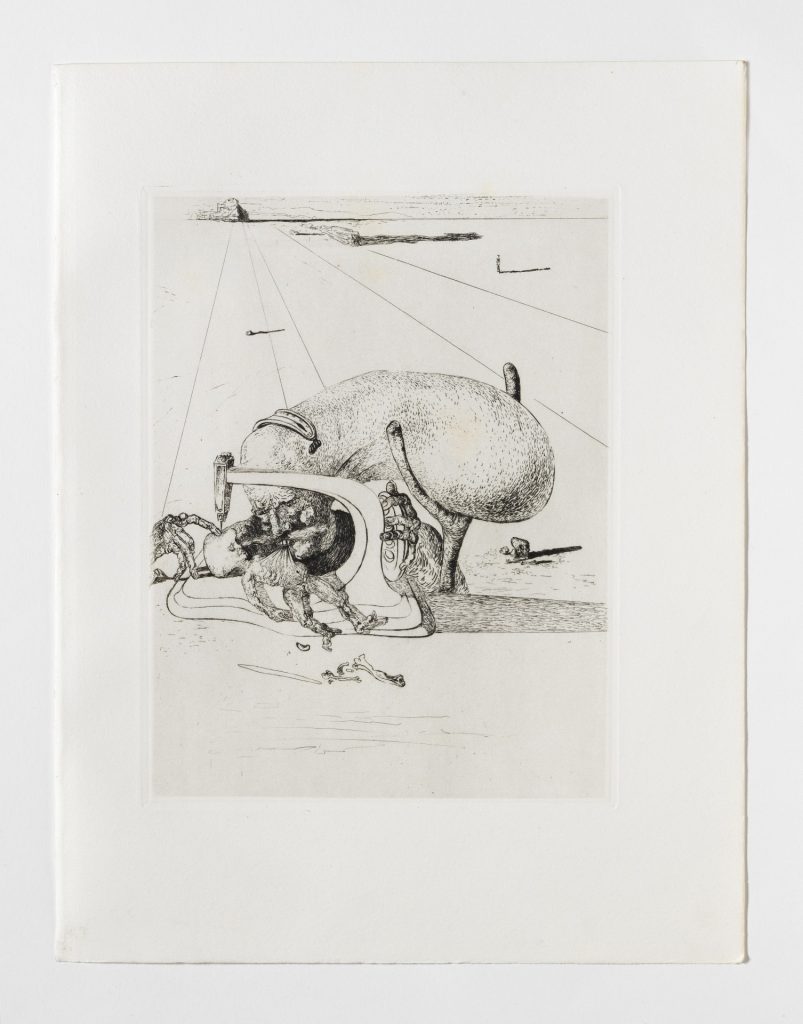
The documented graphic work of Salvador Dalí for the years from 1924 to 1940 falls into two distinct periods, both chronologically and stylistically. The first, corresponding to the 1920s, is primarily associated with the artist’s family and friends. The second period, the 1930s, coincides with Dalí’s move to Paris following his break with his family due to his relationship with Gala Éluard and his entry into the Surrealist movement, of which he almost immediately became a prominent member.
The classification is published in the section On the context of the Graphic Work under the heading Artistic criteria of the Fundació Gala-Salvador Dalí regarding graphic work.
In the category of Original Graphic Work, up to 1940, three types of works can be identified—unique graphic works, graphic works from editions, and singular graphic works—on the basis of the criteria detailed below:
ARTIST’S PROOF (A.P.)
A copy of an original edition traditionally reserved for the artist. Such copies are identified by the initials A.P. or E.A.
Ref.: FGSD: Thesaurus
BEVEL
Filing of the sharp edges of the metal plate (usually copper) prior to printing, to prevent the paper from being cut when it receives the pressure of the press.
Ref.: BÉGUIN (1998: 43), CLARKE (2001: 28), FOUCHÉ, PÉCHOIN, SCHUWER (2002: 338), RUBIO (1979: 287), VIVES (2015: 300).
BINDER
A colloid substance giving cohesion and viscosity to the pigments used in inks and paints.
Ref.: BÉGUIN (1998: 181), CLARKE (2001: 30).
In preparing the Catalogue raisonné of Graphic Works by Salvador Dalí, the unique nature of the artist’s graphic work has been taken into account throughout, and its particularities are accordingly reflected in the structure and presentation of this catalogue. The editorial approach is based on the two existing catalogues raisonnés of the Fundació Gala-Salvador Dalí: the Catalogue raisonné of Paintings by Salvador Dalí and the Catalogue raisonné of Sculpture and Three-Dimensional Works by Salvador Dalí.
Like these earlier catalogues, the publication of this catalogue raisonné in digital format allows for the ongoing expansion and revision of its contents. The team remains dedicated both to preparing the subsequent sections and to expanding the information presented in the sections already published.
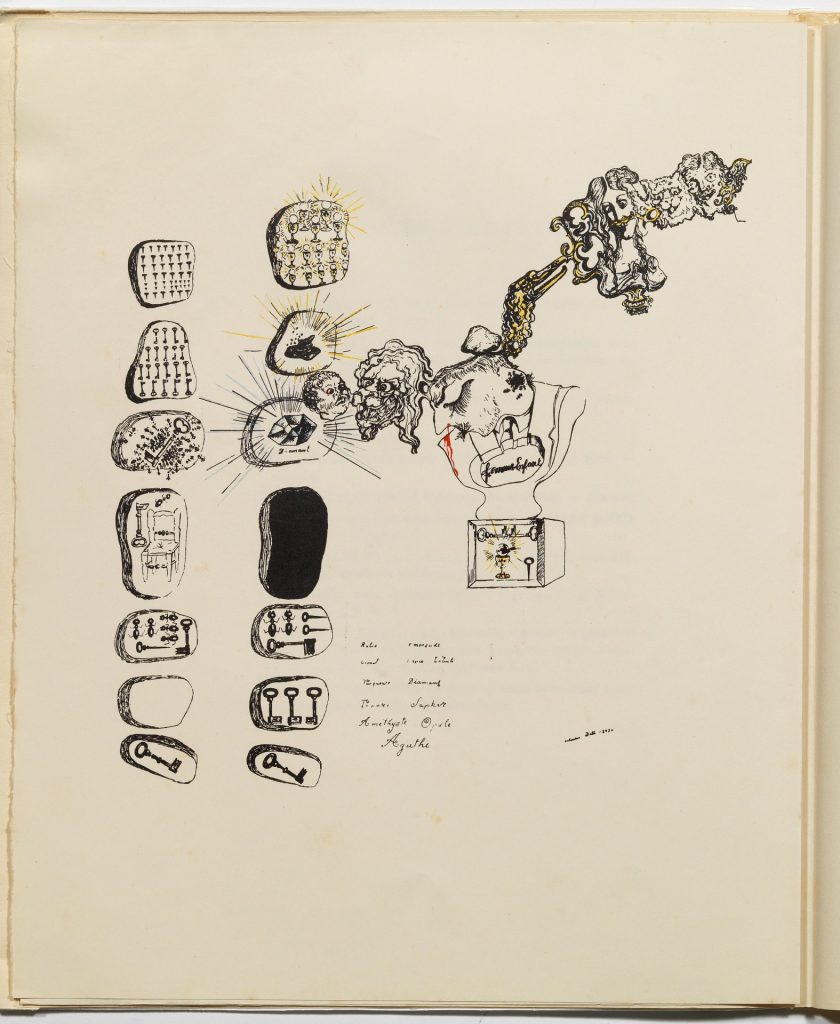
This digital edition of the Catalogue Raisonné of Salvador Dalí’s Graphic Works offers a complete and chronological overview of the artist’s graphic work.
The section About the Catalogue Raisonné has six main subsections, comprising a chronological overview, the characteristics of the original graphic works, a glossary of terms, the methodology used to create the catalogue raisonné, this user manual, and the team behind it. Additionally, a link is included that provides a detailed overview of the context for and classification of the artist’s graphic works.
SCIENTIFIC DIRECTION
Montse Aguer Teixidor, Director of the Dalí Museums and the Centre for Dalinian Studies
Juliette Murphy, Conservator, Graphic Arts Specialist at the Fundació Gala-Salvador Dalí
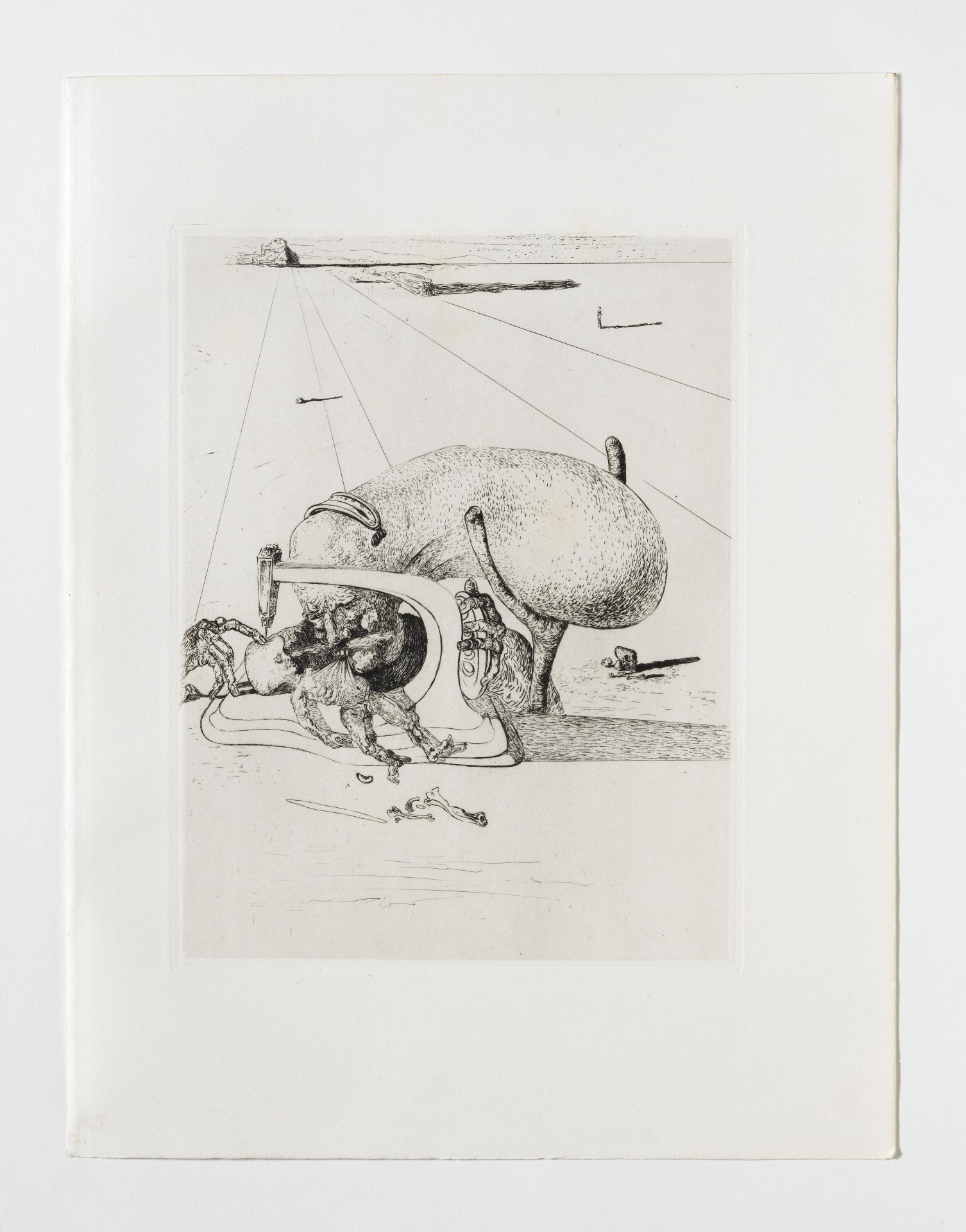
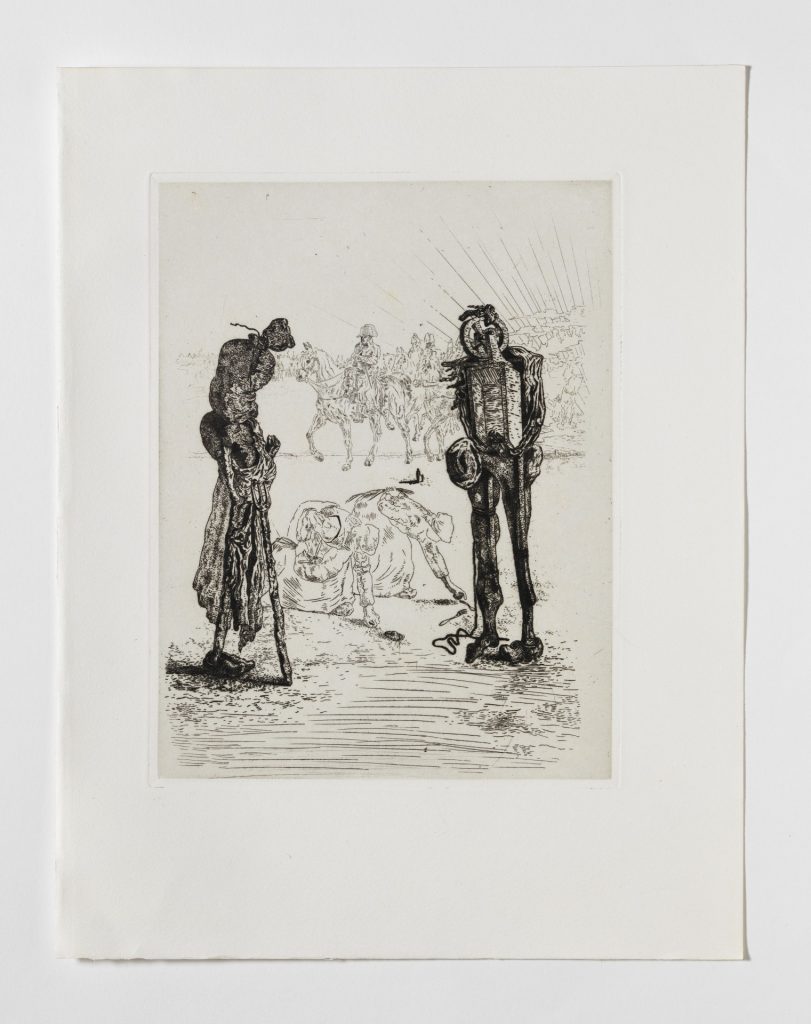
The documented graphic work of Salvador Dalí for the years from 1924 to 1940 falls into two distinct periods, both chronologically and stylistically. The first, corresponding to the 1920s, is primarily associated with the artist’s family and friends. The second period, the 1930s, coincides with Dalí’s move to Paris following his break with his family due to his relationship with Gala Éluard and his entry into the Surrealist movement, of which he almost immediately became a prominent member.
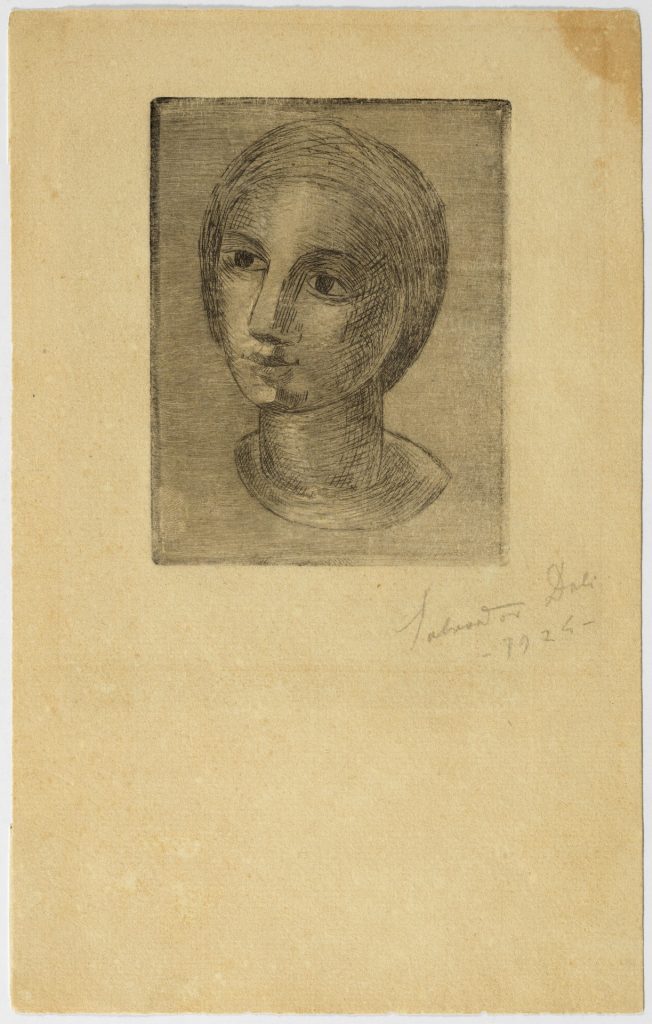
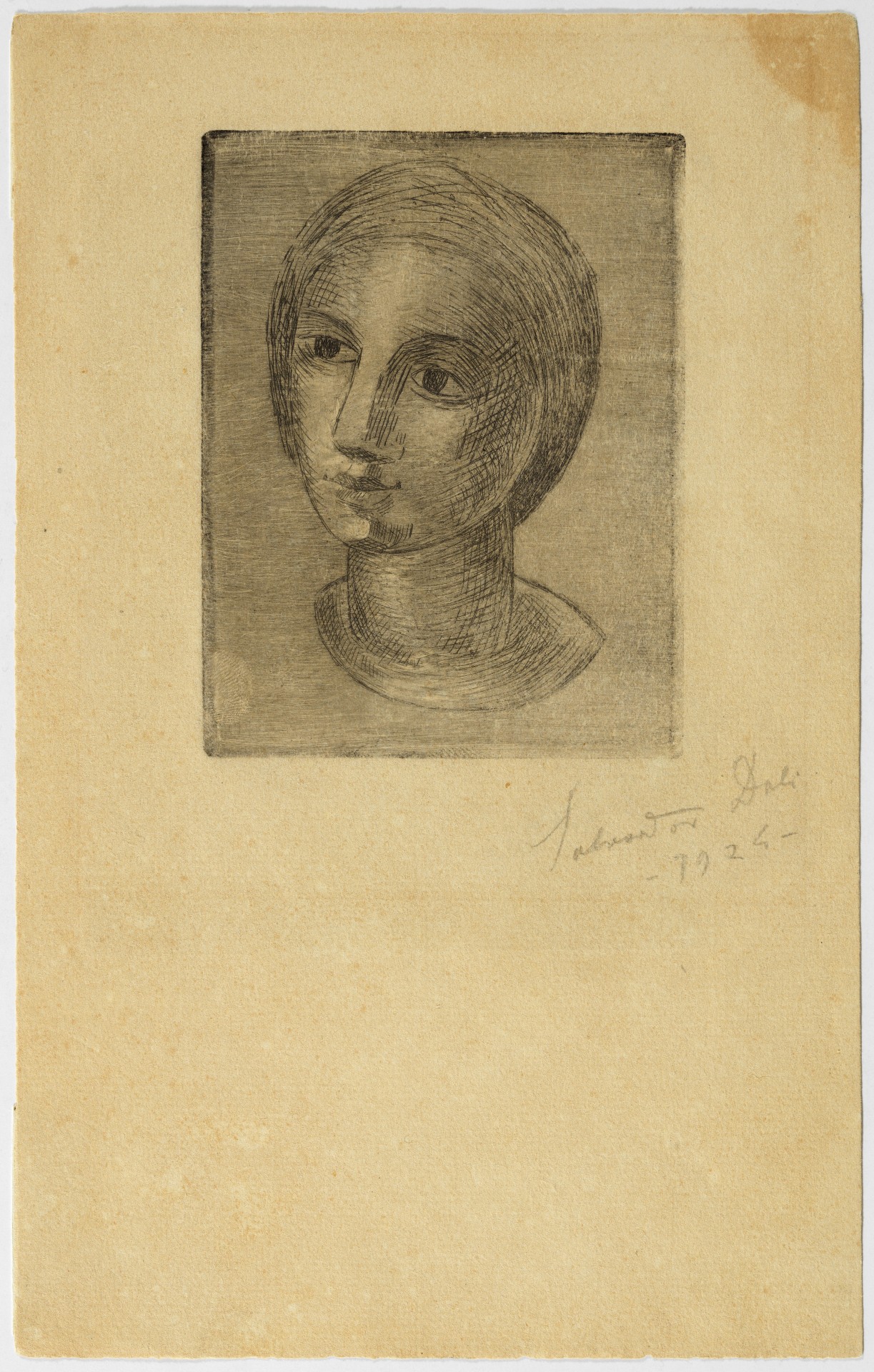
Dalí’s graphic work from this first period includes works inspired by his surroundings in Figueres and his period of study in Madrid (1922-1926). Most of these prints were created using intaglio techniques, with the exception of the 1925 book-plate, drawn in pen and ink and reproduced at a local print shop, which constitutes an early example of the incorporation of photomechanical processes into the artist’s work. Taken together, these pieces bear witness to Dalí’s commitment to this discipline. Of note among them is Cap de noia (Head of a girl), an etching from 1924 that includes a discarded maculature or cognate, Retrat del pare (Portrait of the artist’s father), on the reverse of the sheet. Another significant work, Estudi de nu femení en repòs (Study of a female nude at rest), reproduces a celluloid matrix etched in drypoint and printed with graphite powder. Both prints coincide with Dalí’s student years in Madrid at the Special School of Painting, Sculpture and Engraving of the Real Academia de Bellas Artes de San Fernando.
This was a turbulent period, during which Dalí was suspended for his entire second year, from late October 1923. Even so, the young artist continued to work intensely, returning to Figueres and resuming his studies with Don Juan Núñez, a renowned master of engraving who had been his art teacher in senior school.
Indeed, the graphic work of this early period reflects the influence of a number of sources, such as Jean-Auguste-Dominique Ingres (1780-1867); the Catalan Futurist poet Joan Salvat-Papasseit (1894-1924); and Picasso (1881-1973), who, having created Cubism in tandem with Georges Braque (1882-1963), was then associated with the rappel à l’ordre movement in Paris.[1] A small group of Dalí’s prints, intimate in style and etched in drypoint on celluloid, reflect his deep friendship with Federico García Lorca (1898-1936); meanwhile, the book-plate of 1925 is evidence of his relationship with his first patron, Josep Puig Pujades (1883-1949), a Catalan writer and prominent politician in the province of Girona.
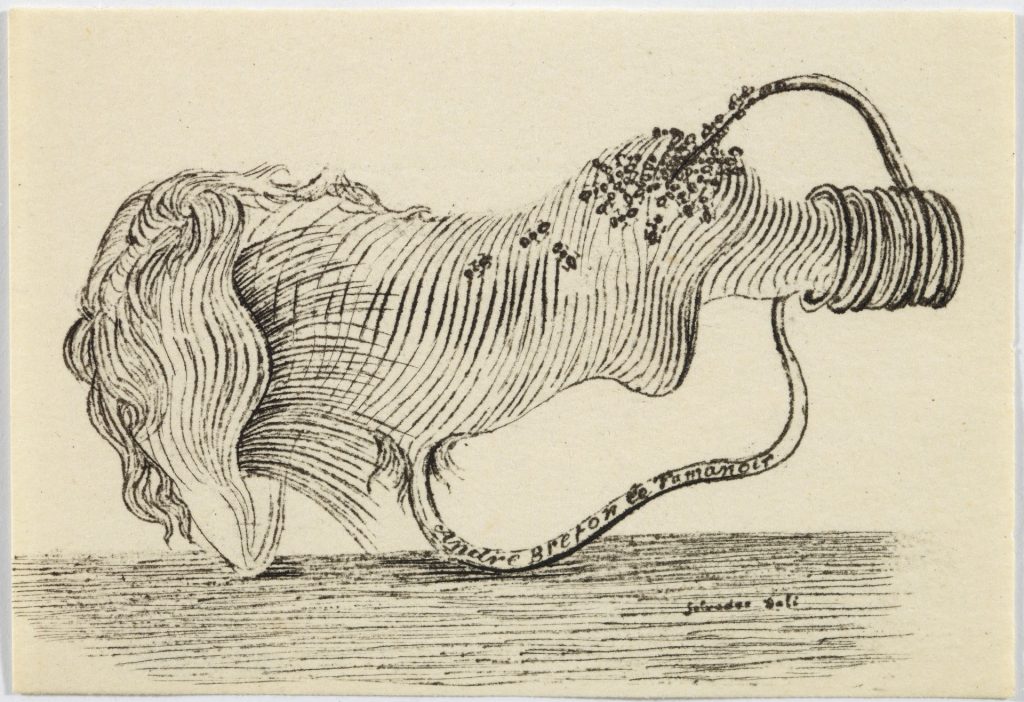
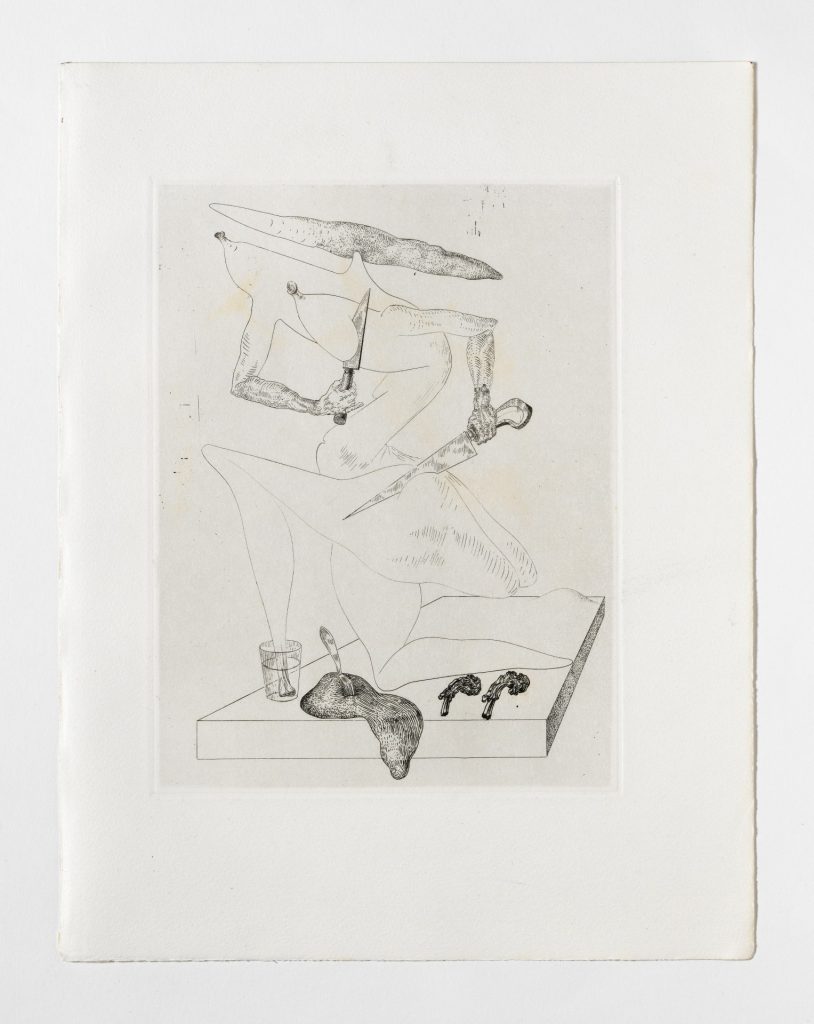
Regarding the second stage of Dalí’s graphic work, corresponding to his Surrealist period from 1930 on, it is worth noting that this includes highly significant works created using intaglio techniques, most of which are linked to limited-edition books produced in renowned print workshops and intended for a specialist market. For example, the first frontispiece that Dalí created for the Second Manifesto of Surrealism (1930) proceeds from an ink drawing reproduced in phototype with colour applications using the pochoir or stencil technique, a specialized artisanal process with a long tradition in France. Dating from the same year are three other books—L’Immaculée conception by André Breton and Paul Éluard, René Char’s Artine, and La Femme visible by Dalí himself—featuring photogravure reproductions from original ink drawings with drypoint retouching by the artist.
In 1933, Dalí created the thirty full-page illustrations for Les Chants de Maldoror (1934), a seminal work in the form of six prose cantos by the young poet Isidore Ducasse, better known by his pseudonym, the Comte de Lautréamont (1846–1870). The prints were reproduced using photogravure from drawings and drypoint engravings on celluloid by the artist.
Between 1935 and 1938, Dalí’s graphic work reflects the influence of North American culture, the result of his several trips to the USA. This influence is especially evident in the print Cranes mous et harpe cranienne (1935), whose composition evokes the ceaseless movement of the modern urban world. In contrast, in Cours Naturel (1938), the love poems by Paul Éluard, Dalí captures ‘the heart-rending cries coming from Republican Spain’ during the Spanish Civil War.[2] In 1939, with the outbreak of World War II, the artist went into exile in the United States, where he remained until 1948.
[1] See Fanés, Félix et. al., Salvador Dalí: The Early Years, Hayward Gallery Publishing, London, 1994, p. 91.
[2] André Breton, feuille volante broadside Cours Naturel.
The classification is published in the section On the context of the Graphic Work under the heading Artistic criteria of the Fundació Gala-Salvador Dalí regarding graphic work.
In the category of Original Graphic Work, up to 1940, three types of works can be identified—unique graphic works, graphic works from editions, and singular graphic works—on the basis of the criteria detailed below:
ORIGINAL GRAPHIC WORK
1. Unique original work by Salvador Dalí (= 1 work)
• Unique original work by Salvador Dalí, resulting from a manual process
2. Unique original version by Salvador Dalí (1 version = 1 work)
• Unique original version by Salvador Dalí, resulting from a manual process
3. Original limited edition authorised by Salvador Dalí
• Individual or multiple original work in a limited edition authorised by Salvador Dalí
4. Original Open Edition authorised by Salvador Dalí
• Original open edition work by Salvador Dalí
5. Singular Original Work by Salvador Dalí (≥ 1 work)
• Singular original work by Salvador Dalí, resulting from various printing processes
For more information see Artistic criteria of the Fundació Gala-Salvador Dalí regarding graphic work: classification.
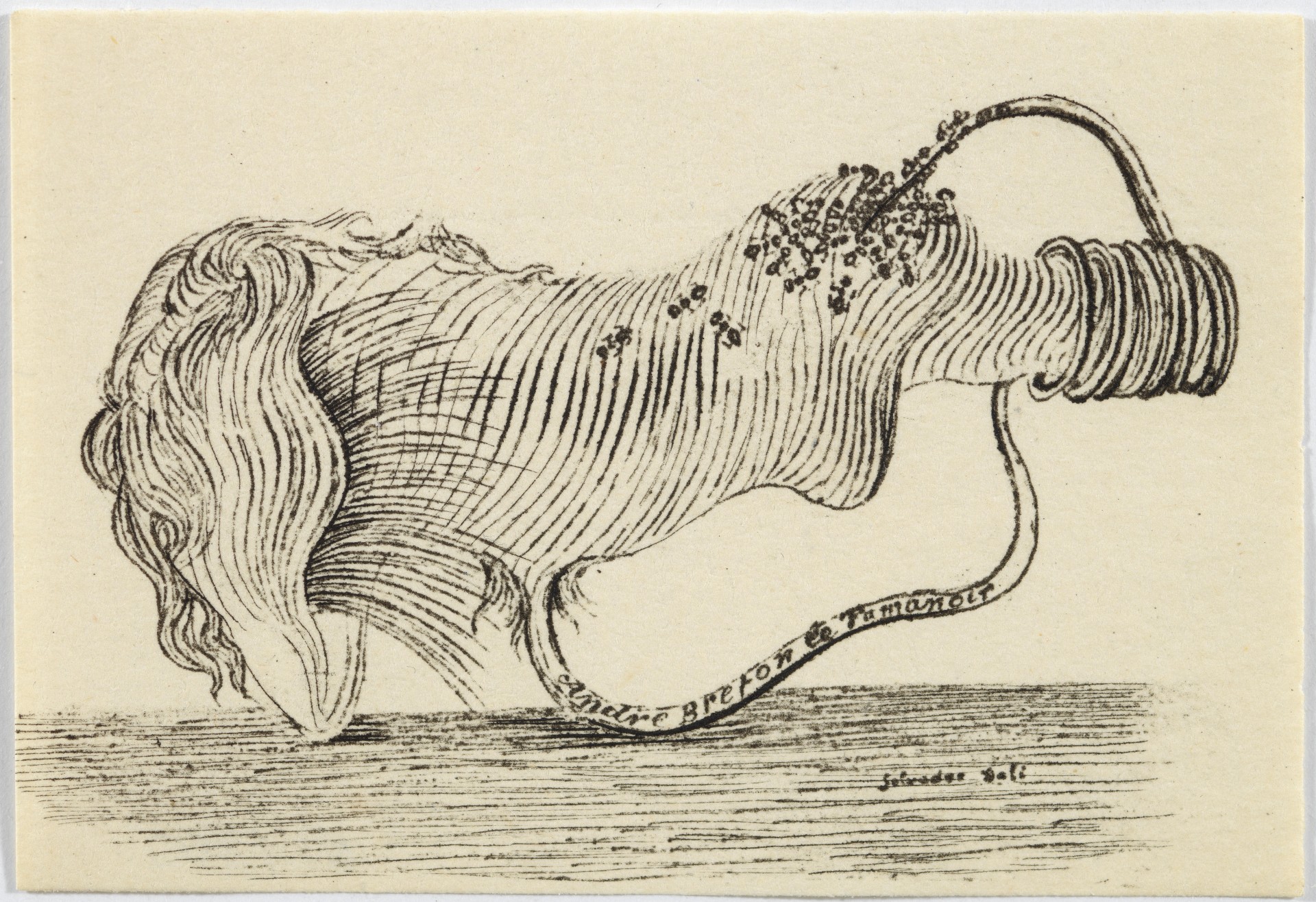
A copy of an original edition traditionally reserved for the artist. Such copies are identified by the initials A.P. or E.A.
Ref.: FGSD: Thesaurus
Filing of the sharp edges of the metal plate (usually copper) prior to printing, to prevent the paper from being cut when it receives the pressure of the press.
Ref.: BÉGUIN (1998: 43), CLARKE (2001: 28), FOUCHÉ, PÉCHOIN, SCHUWER (2002: 338), RUBIO (1979: 287), VIVES (2015: 300).
A colloid substance giving cohesion and viscosity to the pigments used in inks and paints.
Ref.: BÉGUIN (1998: 181), CLARKE (2001: 30).
A general term for the element to be printed, in the form of a single sheet of metal or other material, formed by one unique component.
In photography, a cliche stereotype block, which may be positive or negative, line or halftone, is used to prepare the final printing plate for letterpress and offset printing.
In letterpress: printing plates are the blocks that bear the elements of the image to be printed in relief and reverse. They are divided into line, stroke, or pen plates and halftone or direct plates.
In the offset process, the printing plate is usually of zinc or aluminium.
Ref.: BÉGUIN (1998: 89), DREYFUS, RICHAUDEAU (1990: 105-106), FOUCHÉ, PÉCHOIN, SCHUWER (2002: 542), RUBIO (1979: 288).
A pointed steel engraving tool used to cut directly into the metal matrix without leaving a burr. In contrast to the drypoint technique, engravings made with a burin are distinguished by the sharpness of their lines.
Ref.: BÉGUIN (1998: 62), BLAS, CIRUELOS, BARRENA (1996: 89), BRUNNER (1975: 81), CLARKE (2001: 113), FOUCHÉ, PÉCHOIN, SCHUWER (2002: 401-406), HIND (1952: 21), NADEAU (1997: 153), VIVES (2000: 180), VIVES (2015: 72, 301).
A technique that uses two paper supports to receive the print: a very thin paper-formerly imported from China-combined with a larger, thicker printing paper. The two papers are placed on top of the inked plate and printed simultaneously. The pressure of the press fuses the papers together, with the thinner sheet on top, to create a very delicate background, thus enhancing the printed image.
Ref.: BÉGUIN (1998: 87), MoMA
Satin-finish paper, coated on one or both sides with a special paste to improve surface smoothness. It is mainly used for glossy magazines, and for engravings and photographs.
Ref.: FOUCHÉ, PÉCHOIN, SCHUWER (2002: 664), VIVES (2015: 303), SOUSA (2004: 719).
A pictorial technique in which various elements are combined to create a work of art.
Ref.: CLARKE (2001:61), FOUCHÉ, PÉCHOIN, SCHUWER (2002: 564).
A printed sheet at the end of a book indicating the name of the printer and any other printing workshop involved, the date of printing, and other details of the edition.
Ref.: DREYFUS, RICHAUDEAU (1990: 108), FOUCHÉ, PÉCHOIN, SCHUWER (2002: 17, 577), SOUSA (2004: 198).
Information about the print run with details of the edition, including the exact number of copies of the limited edition.
Ref.: DREYFUS, RICHAUDEAU (1990: 443), VIVES (2015: 309).
A strip of paper, parchment, or other folded material, of the same length as the height of the volume in question, to which a loose sheet is glued or sewn.
Ref.: FOUCHÉ, PÉCHOIN, SCHUWER (2011: 67), SOUSA (2004: 152, 378).
The identification number assigned to each copy of a numbered edition. In general, the copy number appears in the lower left margin of the paper, followed by the denominator-the total number of copies in the limited edition.
Ref.: BÉGUIN (1998: 253), FOUCHÉ, PÉCHOIN, SCHUWER (2011: 43), SOUSA (2004: 682), VIVES (2015: 311).
Each of the works belonging to the same original limited edition. Each specimen must be duly identified by a number that allows its individual identification within the total number of specimens in the edition.
Ref.: FOUCHÉ, PÉCHOIN, SCHUWER (2005: 156), SOUSA (2004: 348), STRACHAN (1969: 346), FGSD: Thesaurus
A method of wiping the printing plate that leaves a small amount of ink visible on the surface, softening the definition of the lines during printing.
Ref.: BÉGUIN (1998: 305), CLARKE (2001: 208), FOUCHÉ, PÉCHOIN, SCHUWER (2011: 562), GOLDMAN (1981: 12), VIVES (2015: 107).
A direct intaglio printing technique that begins with a drawing on a plate-usually metal-made by incising it with a steel point. Ink is then applied to the plate, which is then wiped with tarlatan cloth or tissue paper, so that the ink remains only in the grooves. A sheet of paper is then placed on top and passed through a high-pressure press so that the paper takes up the ink from the plate. A distinctive feature of this technique is the burr-the small, raised areas that form on either side of the incision. In the printing process, these burrs collect ink, giving the final print a glazed effect.
The term ‘drypoint’ applies to any point used to draw directly on the plate, hence the name of the process.
Ref.: BÉGUIN (1998: 282), BLAS, CIRUELOS, BARRENA (1996: 141), BRUNNER (1975: 101), CLARKE (2001: 79), FOUCHÉ, PÉCHOIN, SCHUWER (2011: 294), GOLDMAN (1981: 2), HIND (1952: 31)
RUBIO (1979: 290), SOUSA (2004: 469, 767), VIVES (2000: 196), VIVES (2015: 314).
This is a simplified process employed in teaching the technique of drypoint engraving, using a celluloid plate instead of metal. The incised plate-which is transparent-is printed in the same way as an intaglio print, with intaglio ink or a mixture of coloured pigments with a binder. See also GRABADO A LA PUNTA SECA SOBRE CELULOIDE
Ref.: BAYARD (1901: 11), BÉGUIN (1998: 82), MASON (1993: 20), NADEAU (1997: 61), PETRINA (n.d.: 41).
In printing, the complete set of copies of a work that are published together to constitute a single edition.
Ref.: https://www.getty.edu/vow/AATServlet?english=N&find=EDITION&logic=AND&page=1¬e= (accessed 12/17/2024).
A document establishing the agreement between the artist and the publisher for production of an edition of a work, noting the relevant details, such as number of copies, materials, dimensions, etc.
Ref.: SOUSA (2004: 231), FOUCHÉ, PÉCHOIN, SCHUWER (2002: 630), FGSD: Thesaurus
The engraving is obtained without the use of acids, with the incisions made directly into the plate with a burin, a steel tool with a distinctive square or rhomboidal cross-section.
Ref.: CLARKE (2001: 89), SOUSA (2004:467), VIVES (2015: 72-78).
1. The art of making incisions in relief.
2. Various engraving processes.
3. The reproduction of images using plates engraved by a manual or mechanical, artistic or industrial process.
4. The image obtained by one of these processes.
Ref.: BÉGUIN (1998: 153), BLAS, CIRUELOS, BARRENA (1996: 112), CLARKE (2001: 90), DREYFUS, RICHAUDEAU (1990: 651), FOUCHÉ, PÉCHOIN, SCHUWER (2005: 405), SOUSA (2004: 465)
GEAA: Art & Architecture Thesaurus Full Record Display (Getty Research).
An indirect incision engraving technique using a mordant (nitric acid or ferric chloride) to bite into the incision made by the burin on a steel or copper plate previously coated with a protective layer of varnish. The corrosive fluid acts on the exposed incisions of the plate to facilitate subsequent inking.
2. Plate engraved using this process.
3. Print or sheet obtained by this process.
Ref.: BÉGUIN (1998: 113), BLAS, CIRUELOS, BARRENA (1996: 80), BRUNNER (1975: 115), CLARKE (2001: 91), GOLDMAN (1981: 4), HIND (1952: 33), RIAT (1983: 189), SOUSA (2004: 37, 465), VIVES (2000: 177), NADEAU (1997: 103).
AGUATINTA, AIGUATINTA – AQUATINTE, AQUATINT
An indirect intaglio engraving technique and a type of etching capable of a range of different tones, which can approximate the appearance of a watercolour. A technique almost always used in combination with etching, the main element of the process is the partial protection of the copper engraving plate with a powdered resin varnish sprinkled over the surface. The plate is then subjected to uniform heating and etched with acid. As the resin is impermeable to acid, only the exposed areas between the grains are etched, and contain enough ink to create a wash effect when printed.
Ref.: BÉGUIN (1998: 27), BLAS, CIRUELOS, BARRENA (1996: 82), BRUNNER (1975: 143), CLARKE (2001: 13), FOUCHÉ, PÉCHOIN, SCHUWER (2002: 123), GOLDMAN (1981: 1), HIND (1952: 49), NADEAU (1997: 34), RIAT (1983: 193), RUBIO (1979: 287), SOUSA (2004: 38, 465), VIVES (2000: 178).
Engraving tool. A steel rod with a sharp point, used in particular for drypoint and etching.
Ref.: VIVES (2015: 314).
Image or mark of ownership usually attached to the flyleaf of a book in the form of a handwritten or printed identification in a vignette indicating ownership.
Since the late 19th century, book-plates have frequently been included in collections and conserved separately from the books from which they are taken.
Ref.: BÉGUIN (1998: 136), BLAS, CIRUELOS, BARRENA (1996: 107), DREYFUS, RICHAUDEAU (1990: 202), FOUCHÉ, PÉCHOIN, SCHUWER (2005: 159), SOUSA (2004: 405).
The final, artist-approved proof an to be reproduced by the printer in the edition. Generally indicated with the initials of the French term, B.A.T.
Ref.: BÉGUIN (1998: 136) VIVES (2015: 176).
A full-page illustration on the title page of a book, in some instances printed separately and inserted by hand. An illustrated page that was formerly placed at the beginning of a book.
Ref.: BÉGUIN (1998: 140), BLAS, CIRUELOS, BARRENA (1996: 110), FOUCHÉ, PÉCHOIN, SCHUWER (2005: 319), SOUSA (2004: 446).
A dry printing process on a support of paper, cardboard, etc., in relief or indentation.
Ref.: BÉGUIN (1998: 145), BLAS, CIRUELOS, BARRENA (1996: 111), SOUSA (2004: 464), Art & Architecture Thesaurus Full Record Display (Getty Research).
Opaque water-medium pigment. Unlike watercolour, the lighter tones of gouache are obtained by adding white.
Ref.: BLAS, CIRUELOS, BARRENA (1996: 34), CLARKE (2001: 111).
The generic ‘graphic art’ encompasses the various modes of original expression or representation of visual elements on an opaque or transparent surface. However, this term is usually applied to works resulting from the use of artisanal or industrial processes to reproduce visual elements in the creation of printed works encompassing specialised techniques and procedures characterised by their ability to produce precisely repeatable images.
Ref.: BLAS, CIRUELOS, BARRENA (1996: 85), CLARKE (2001: 113), DREYFUS, RICHAUDEAU (1990: 29), FOUCHÉ, PÉCHOIN, SCHUWER (2011: 158), SOUSA (2004: 65).
The graphic representations of the work that can be considered individually. These include the vignettes or other illustrative elements that may appear on the printed pages of the work.
Ref.: SOUSA (2004: 352).
Also called a ‘carbon black’ or ‘wax’ proof. A proof from an incised plate printed with graphite powder or carbon black pigment with a binder. Graphite powder or pigment is applied to the grooves, and the image is then transferred to paper or another support using a press, or by a process that involves rubbing the reverse side of the paper with a burnisher.
This process has frequently been used particularly with transparent plates or sheets of celluloid. See DRYPOINT ENGRAVING ON CELLULOID.
Ref.: RMM (1992: 34-35).
The first printed page of a book; it usually contains only the title of the work.
Ref.: FOUCHÉ, PÉCHOIN, SCHUWER (2005: 192), SOUSA (2004: 750).
The photogravure is a photomechanical variant of etching, from which it differs by being engraved in intaglio. The method follows that of the aquatint process: the surface of the metal plate is uniformly sprayed with bitumen, which is fixed to the metal by heat, and then coated with a layer of bichromated gelatin-a photosensitive substance insoluble in water after exposure to light; the transparency of the image is projected onto the gelatin, and the lines corresponding to the drawing do not receive light.
The lines of the drawing appear when the plate has been cleaned with warm water and the gelatin removed; the plate is then immersed in an acid bath so that it is etched in halftones, similar to an aquatint. The procedure lies halfway between conventional aquatint and photogravure.
Ref.: BÉGUIN (1998: 160), BRUNNER (1975: 162), BLAS, CIRUELOS, BARRENA (1996: 118), FOUCHÉ, PÉCHOIN, SCHUWER (2005: 460),NADEAU (1997: 125,372,374), RIAT (1983: 200), SOUSA (2004: 479), VIVES (2000: 189), VIVES (2015: 99, 308).
Proofs that are not for sale, reserved for the artist or the printer. Generally indicated with the initials of the French term, H.C.
Ref.: VIVES (2015: 176, 322). Ref.: BEGUIN (1998: 27, 82, 133), BLAS, CIRUELOS, BARRENA (1996: 89), CLARKE (2001: 200), FOUCHÉ, PÉCHOIN, SCHUWER (2005: 94), GOLDMAN (1985: 11), MASON (1992: 34-35), SOUSA (2004: 763), VIVES (2015: 313), FGSD: Thesaurus
Reproduction of an image by direct or indirect transfer onto a support using a printing element designed for this purpose.
Ref.: CLARKE (2001: 124), FOUCHÉ, PÉCHOIN, SCHUWER (2005: 527), SOUSA (2004: 504).
The act of applying ink. In intaglio printing, ink is applied with a pad to the surface of the printing plate so that it penetrates the incised grooves. The excess is then cleaned with tarlatan so that the ink remains only in the incisions.
The term à la poupée refers to the application of different coloured inks to the same printing plate for a single printing. See POUPÉE, À LA.
Ref.: SOUSA (2004: 372), VIVES (2000: 184).
A generic term for the various manual intaglio engraving techniques: burin, etching, drypoint, aquatint, mezzotint.
In a more restricted sense, it refers only to engraving with a burin.
Ref.: BÉGUIN (1998: 326), BLAS, CIRUELOS, BARRENA (1996:148), CLARKE (2001: 126), DREYFUS, RICHAUDEAU (1990: 651), FOUCHÉ, PÉCHOIN, SCHUWER (2011:808), NADEAU (1997:133)
VIVES (2000: 199), VIVES (2015: 315).
A generic term referring to the art of engraving on metal plates, encompassing all engravings made on metal plates and printed using a printing press. It includes both direct processes (burin, drypoint) and indirect processes (etching, aquatint, etc.).
Ref.: BÉGUIN (1998: 82), BLAS, CIRUELOS, BARRENA (1996: 92), CLARKE (2001: 126), FOUCHÉ, PÉCHOIN, SCHUWER (2002: 499), GOLDMAN (1981: 5), HIND (1952: 7), NADEAU (1997: 62), RIAT (1983: 304), RUBIO (1979: 288), SOUSA (2004: 137), VIVES (2000: 181), VIVES (2015: 301).
Traditionally high-quality paper from Japan, generally made from a pulp of the inner bark of the ganpi shrub or the mulberry tree. The pulp is combined with a small amount of rice flour, a binder used exclusively by Japanese papermakers, which increases the paper’s viscosity and restricts the potential bleed-through of ink.
Ref.: BLAS, CIRUELOS, BARRENA (1996: 135), SOUSA (2004: 720), TURNER (1991: 36), VIVES (2000: 191), VIVES (2015: 164, 312).
Paper made in a mesh wire mould that leaves its mark in the form of the vertical chain lines and horizontal laid lines on its surface.
Ref.: BLAS, CIRUELOS, BARRENA (1996: 136), CLARKE (2001: 137), FOUCHÉ, PÉCHOIN, SCHUWER (2011: 967), STRACHAN (1969: 348), TURNER (1991: 12), VIVES (2015: 161, 312).
A printing process in which the printing elements are raised in relief.
Ref.: CLARKE (2001: 139), SOUSA (2004: 839), DREYFUS, RICHAUDEAU (1990: 662).
A limited edition comprises a run of copies, the number of which is determined in advance by the artist and the publisher and may not be increased at a later date. The copies that make up the edition are usually numbered consecutively. A limited edition can refer to a single work or a group of works printed at the same time from the same printing plate. After the limited edition is completed, the plates or moulds are generally cancelled or destroyed.
Ref.: CLARKE (2001: 140), GOLDMAN (1981: 6), SOUSA (2004: 340), FGSD: https://www.salvador-dali.org/ca/obra/obra-escultorica/tesaurus
A process of photomechanical reproduction that produces relief prints without a halftone screen for printing. The process allows for the reproduction of an artist’s drawing by photomechanical transfer onto a metal plate. The plate is then engraved in relief without a halftone screen for letterpress printing. The line print is without colour gradations, as the process cannot reproduce intermediate tonal values.
Ref.: BÉGUIN (1998: 275), BRUNNER (1975: 66, 327), DREYFUS, RICHAUDEAU (1990: 230), FOUCHÉ, PÉCHOIN, SCHUWER (2002: 542; 2011: 227), NADEAU (1997: 152, 384), PETRINA (n.d.: 117), SOUSA (2004: 441, 468).
1. A planographic printing technique that allows the reproduction of multiple copies from a line drawn on stone (historically, Bavarian limestone) or on a zinc plate, using an oil-based ink prepared with gum arabic and nitric acid. A unique characteristic of this technique lies in the mutual repulsion between oil and water, which causes the ink to adhere to the oily areas of the line and be repelled by the absorbent areas of the printing plate.
2. Image obtained by this process.
Ref.: BÉGUIN (1998: 184), BLAS, CIRUELOS, BARRENA (1996: 123), CLARKE (2001: 141), FOUCHÉ, PÉCHOIN, SCHUWER (2005: 780), GOLDMAN (1981: 6), HIND (1952: 8, 52), NADEAU (1997: 155), SOUSA (2004: 624), VIVES (2000: 192), VIVES (2015: 114, 394).
A book whose conception and creation are directly ascribed to a visual artist-particularly a painter, sculptor, or printmaker. Traditionally, it is an illustrated book created using manual engraving processes. Today, the term encompasses a range of more heterogeneous forms, with the common thread being the desire to express different artistic mediums in the format of a book.
Ref.: FOUCHÉ, PÉCHOIN, SCHUWER (2005: 793), STRACHAN (1969: 19, 347).
Second printing of a plate without re-inking. The result is a print with very little ink. The term is also applied to ink proofs prior to the final printing.
Ref.: BÉGUIN (1998: 231), BLAS, CIRUELOS, BARRENA (1996: 125), CLARKE (2001: 146), DREYFUS, RICHAUDEAU (1990: 537), FOUCHÉ, PÉCHOIN, SCHUWER (2005: 834), GOLDMAN (1985: 8)
HIND (1952: 60), WELSH REED, MAZUR (1980: 3, 62), GEAA: Art & Architecture Thesaurus Results List (Getty Research).
The base support for any printing process (a plate of metal, stone, celluloid, etc.) worked on by the artist or under their supervision. The plate thus worked on may then be inked and the ink transferred to the final support of the artwork, usually paper.
Ref.: BÉGUIN (1998: 235), BLAS, CIRUELOS, BARRENA (1996: 127), FOUCHÉ, PÉCHOIN, SCHUWER (2005: 909), SOUSA (2004: 658).
A print that combines two or more printmaking techniques.
Ref.: BLAS, CIRUELOS, BARRENA (1996: 149).
An artistic printing technique that consists of transferring a single image, previously painted or marked on a plate, which will usually have a smooth, unworked surface, onto a paper support.
In some instances, a second, appreciably paler print is obtained. See MACULATURA.
Ref.: BÉGUIN (1998: 240), BLAS, CIRUELOS, BARRENA (1996: 128), CLARKE (2001: 156), GOLDMAN (1981: 10), HIND (1952: 56), WELSH REED, MAZUR (1980: 3, 62), RUBIO (1979: 289), SOUSA (2004: 672), VIVES (2000: 193), VIVES (2015: 125, 311).
A system by which the limited number of impressions from a single printing plate is expressed in writing and numerically, establishing this limit.
Ref.: BÉGUIN (1998: 253), BLAS, CIRUELOS, BARRENA (1996: 129), FOUCHÉ, PÉCHOIN, SCHUWER (2011: 43), VIVES (2000: 194), VIVES (2015: 311).
An indirect planographic printing process using one of the basic principles of lithography-the mutual repulsion of oil-based inks and water-in which the paper substrate comes into direct contact not with the printing elements but with a rubber cylinder, which transfers the image from the printing elements of the inked plate. This process is used for the industrial reproduction of lithographs.
Ref.: BÉGUIN (1998: 255), BRUNNER (1975: 270), BLAS, CIRUELOS, BARRENA (1996: 129), DREYFUS, RICHAUDEAU (1990: 566), FOUCHÉ, PÉCHOIN, SCHUWER (2011: 59), NADEAU (1997: 348), RUBIO (1979: 290), SOUSA (2004: 693), VIVES (2015: 118, 311).
A characteristic printing support, generally made from plant fibres, mixed with water to form a pulp or slurry and subjected to different processes to form a flexible and resistant support.
Ref.: BÉGUIN (1998: 260), BLAS, CIRUELOS, BARRENA (1996: 131), CLARKE (2001: 179), DREYFUS, RICHAUDEAU (1990: 594), FOUCHÉ, PÉCHOIN, SCHUWER (2011: 101), SOUSA (2004: 714), TURNER (1991: 9).
A paper-like material produced in thin sheets from the pith of the papyrus plant, used as a writing surface in Antiquity and during the Middle Ages.
Ref.: CLARKE (2001: 179), FOUCHÉ, PÉCHOIN, SCHUWER (2011: 116), SOUSA (2004: 722), TURNER (1991: 45).
Animal hide-traditionally sheep, goat, or calf-treated through cleaning, scraping, and drying processes for use as a surface for drawing and writing.
Ref.: BLAS, CIRUELOS, BARRENA (1996: 39), CLARKE (2001: 179), FOUCHÉ, PÉCHOIN, SCHUWER (2011: 126), SOUSA (2004: 731), TURNER (1991: 46), VIVES (2015: 313).
A set of photomechanical engraving processes using a photographic plate of zinc, copper, etc.
In letterpress photogravure, the printing elements are raised.
In offset photogravure, the printing and non-printing elements are practically on the same plane, while in intaglio photogravure (heliogravure), the printing elements are recessed.
The photogravure process allows the combining of manual and photomechanical processes to achieve an original work created using both kinds of intervention.
Ref.: BÉGUIN (1998: 275), BLAS, CIRUELOS, BARRENA (1996: 110), BRUNNER (1975: 162,341), CLARKE (2001: 186), DREYFUS, RICHAUDEAU (1990: 226-231), FOUCHÉ, PÉCHOIN, SCHUWER (2011: 259,220), SOUSA (2004: 439-443), VIVES (2000: 187), VIVES (2015: 305).
A process by which an image is reproduced on a metal lithographic plate by photographic transfer.
Ref.: BÉGUIN (1998: 225, 275), BLAS, CIRUELOS, BARRENA (1996: 110), FOUCHÉ, PÉCHOIN, SCHUWER (2011: 259, 221), MALENFANT, STE-MARIE (2000: 63), NADEAU (1997: 374), SOUSA (2004: 443).
FOTOTIPIA, COLOTIPIA, FOTOTÍPIA – PHOTOTYPIE, COLLOTYPE, PHOTOTYPE
A photomechanical process based on the same principle as lithography: the mutual repulsion between oil and water. It allows the reproduction of images by exposing a light-sensitive gelatin solution to a glass or metal plate in contact with a photographic negative. The gelatin-which forms a network of very fine grains on the surface-hardens in proportion to the strength of the light that passes through the negative. These hardened areas are receptive to the printing ink, unlike the areas that retain moisture.
Ref.: BÉGUIN (1998: 91, 275), BRUNNER (1975: 268, 357), CLARKE (2001: 61), DREYFUS, FOUCHÉ, PÉCHOIN, SCHUWER (2011: 224), RICHAUDEAU (1990: 233), SOUSA (2004: 444), VIVES (2015: 101, 306).
Any process by which an image is photographically transferred to a printing surface. This includes photogravure, phototypography, photolithography, and phototype, among others.
Ref.: BLAS, CIRUELOS, BARRENA (1996: 145), FOUCHÉ, PÉCHOIN, SCHUWER (2011: 259, 222)
GOLDMAN (1981: 10), NADEAU (1997: 377, 378), SOUSA (2004: 443).
General term used to refer to all flat-surface planographic printing processes that do not use a relief or intaglio printing plate. It includes lithography, offset printing, phototype, etc., although it is primarily applied to lithography.
Ref.: CLARKE (2001: 188), FOUCHÉ, PÉCHOIN, SCHUWER (2011: 259, 261), NADEAU (1997: 388), SOUSA (2004: 740).
A sheet of a sufficiently hard material such as metal, wood, celluloid, etc., for use as a printing surface.
Ref.: BÉGUIN (1998: 278), CLARKE (2001: 189), FOUCHÉ, PÉCHOIN, SCHUWER (2011: 259), NADEAU (1997: 388), SOUSA (2004: 739), VIVES (2015: 313).
See PLATE MARK.
Impression produced on the substrate by the pressure from the printing plate.
In intaglio, it refers to the mark left by the bevel of the metal plate on the paper.
Ref.: BÉGUIN (1998: 121), CLARKE (2001: 189), FOUCHÉ, PÉCHOIN, SCHUWER (2005: 50), GOLDMAN (1981: 10), SOUSA (2004: 487), VIVES (2000: 183), VIVES (2015: 131, 303).
À la poupée refers to the application of inks of different colours on the same plate to enable a single printing of the plate Though difficult to execute, this process avoids the multiplication of plates.
Ref.: BÉGUIN (1998: 286), CLARKE (2001: 196), FOUCHÉ, PÉCHOIN, SCHUWER (2011: 336).
1. Image obtained by printing from an engraved plate.
Work transferred to paper or other material by means of a printing process.
2. Printed artwork created by the artist or under their direction.
3. Printed text on a separate sheet of paper.
Ref.: BÉGUIN (1998: 12), BLAS, CIRUELOS, BARRENA (1996: 101), CLARKE (2001: 199), DREYFUS, RICHAUDEAU (1990: 199), FOUCHÉ, PÉCHOIN, SCHUWER (2005: 122), MALENFANT, STE-MARIE (2000: 32), SOUSA (2004: 397), VIVES (2000: 185), VIVES (2015: 305).
The total number of prints in a limited edition, duly numbered and authenticated by the artist and the publisher. The print run of the limited edition includes the not-for-sale hors commerce (H.C.) copies, the artist’s proofs (A.P.), and the commercial edition, numbered with Arabic or Roman numerals. These prints share identical characteristics: format, paper type, ink colour, and printing method. See JUSTIFICACIÓN DE LA TIRADA
Ref.: BÉGUIN (1998: 328), BLAS, CIRUELOS, BARRENA (1996: 150), FOUCHÉ, PÉCHOIN, SCHUWER (2011: 844), MALENFANT, STE-MARIE (2000: 42), SOUSA (2004: 846), VIVES (2015: 316).
Person responsible for printing; the person who performs the printing.
Ref.: SOUSA (2004: 508), VIVES (2015: 308).
Action and effect of printing.
Ref.: BÉGUIN (1998: 135), SOUSA (2004: 397), BLAS, CIRUELOS, BARRENA (1996: 102).
Any copy obtained from a printing element during the production process, before the plate is finished and before the final print run
A proof made by the artist in the process of creating their work before the final edition, generally indicating the specific condition of the catalogued copy in relation to the final print.
Ref.: VIVES (2015: 173-176, 220, 322).
A working proof that includes sketches or trials drawn in the margin of the work, which are usually removed before the final print run.
Ref.: BÉGUIN (1998: 133).
A natural person or legal entity responsible, together with the artist, for the publication of a printed work by taking charge of the processes of its production and subsequent distribution.
Ref.: BLAS, CIRUELOS, BARRENA (1996: 98), FOUCHÉ, PÉCHOIN, SCHUWER (2005: 30), SOUSA (2004: 342), VIVES (2015: 304), FGSD: Thesaurus
A small marginal sketch or drawing on the margin of a print.
Ref.: BÉGUIN (1998: 298), BLAS, CIRUELOS, BARRENA (1996: 145), FOUCHÉ, PÉCHOIN, SCHUWER (2011: 530), GOLDMAN (1981: 11), STRACHAN (1969: 348), VIVES (2015: 130, 314).
1. A copy or imitation of a work, particularly literary or artistic, to enable this to be communicated without the intervention of the artist.
2. An exact copy of a document in its content and form, but not necessarily in its dimensions.
Ref.: BÉGUIN (1998: 300), SOUSA (2004: 787), MALENFANT, STE-MARIE (2000: 34).
A rotary intaglio printing process using halftone screens, engraved on cylinders, enabling illustrations and text to be printed in a single process.
Ref.: BÉGUIN (1998: 162, 305), NADEAU (1997: 418), FOUCHÉ, PÉCHOIN, SCHUWER (2011: 600), SOUSA (2004: 485).
A tool consisting of a small, rotating toothed wheel with a handle for creating dotted effects on the copper plate.
Ref.: BRUNNER (1975: 339), CLARKE (2001: 212), SOUSA (2004: 794), VIVES (2015: 315).
A planographic printing technique derived from stencilling, using a template (which may be positive or negative) through which the ink is applied.
The process involves blocking the areas that will not be printed and applying the ink uniformly to the open areas using a rubber squeegee, which forces the ink through the mesh and onto the corresponding substrate. Nowadays, a frame with a vacuum table is generally used, and there are various types of stencils. One of the characteristics of screen printing is that it leaves no plate mark on the paper.
Ref.: BÉGUIN (1998: 311), BLAS, CIRUELOS, BARRENA (1996: 147), BRUNNER (1975: 173, 339)
CLARKE (2001: 219), FOUCHÉ, PÉCHOIN, SCHUWER (2011: 711), SOUSA (2004: 804), VIVES (2015: 123, 315).
A series of conceptually and thematically related works created by the artist, and published together.
Ref.: BLAS, CIRUELOS, BARRENA (1996: 147), FOUCHÉ, PÉCHOIN, SCHUWER (2011: 711).
The handwritten signature in pencil was included on the print from the late 19th century onwards. The handwritten signature incorporates two main concepts: that the artist participated in the process of creating the print; and that the artist approves the work as their own authentic creation.
Ref.: BLAS, CIRUELOS, BARRENA (1996: 108), FOUCHÉ, PÉCHOIN, SCHUWER (2011: 718), SOUSA (2004: 422), VIVES (2000: 187).
During the process of creating a print, several proofs are usually run off to monitor the progress of the work. Each state refers to a print that bears witness to the latest work carried out on the plate, whether or not it was done by the artist.
Ref.: BÉGUIN (1998: 136), FOUCHÉ, PÉCHOIN, SCHUWER (2005: 133), GOLDMAN (1981: 13), VIVES (2015: 305).
A highly specialised technique used to colour prints individually using a sheet of cardboard or metal cut into a template.
Ref.: BÉGUIN (1998: 279), BRUNNER (1975: 365), BLAS, CIRUELOS, BARRENA (1996: 107), CLARKE (2001: 190), DREYFUS, RICHAUDEAU (1990: 199), FOUCHÉ, PÉCHOIN, SCHUWER (2011: 283), SAUDÉ (1925: 1), SOUSA (2004: 398), STRACHAN (1969: 347), VIVES (2015: 62, 316).
A set of prints that are related to each other, and also a group of prints presented together at the end of a book.
Ref.: STRACHAN (1969: 348), VIVES (2015: 315).
A loose cotton fabric traditionally used to wipe away surplus ink in intaglio printing.
Ref.: BÉGUIN (1998: 134, 327), BLAS, CIRUELOS, BARRENA (1996: 149), FOUCHÉ, PÉCHOIN, SCHUWER (2011: 813), VIVES (2015: 316).
The odd-numbered page at the beginning of a book bearing the author’s name, the title of the work, and the publisher.
Ref.: FOUCHÉ, PÉCHOIN, SCHUWER (2011: 850), SOUSA (2004: 747).
A method of reproducing a drawing using various transfer media such as tracing paper, carbon paper, or similar, to copy the relevant lines of the original image.
Ref.: BÉGUIN (1998: 77), BLAS, CIRUELOS, BARRENA (1996: 24, 91), FOUCHÉ, PÉCHOIN, SCHUWER (2002: 429), VIVES (2015: 301).
A proof made after the work is completed, to adjust the pressure, paper, or ink for the final edition.
Ref.: VIVES (2015: 176, 322).
General term for the ornamental motifs that decorate a book. A decorative drawing or print, usually inserted at the beginning or end of a book or a chapter.
Panel at the beginning of a chapter.
Panel at the end of the chapter. Also called a cul-de-lampe.
Ref.: BÉGUIN (1998: 333), BLAS, CIRUELOS, BARRENA (1996: 151), CLARKE (2001: 252), DREYFUS, RICHAUDEAU (1990: 682), FOUCHÉ, PÉCHOIN, SCHUWER (2011: 980), SOUSA (2004: 871), STRACHAN (1969 :345, 349).
A highly luminous water-based paint characterised by the transparency of its colours, the lightest tone being the white of the paper.
Ref.: BLAS, CIRUELOS, BARRENA (1996: 20), CLARKE (2001: 256).
A mark or imprint on a sheet of paper, often only fully visible when held up to the light, generally specific to the maker of the paper.
Ref.: CLARKE (2001: 257), DREYFUS, RICHAUDEAU (1990: 207), FOUCHÉ, PÉCHOIN, SCHUWER (2005: 192), SOUSA (2004: 421), STRACHAN (1969: 346), VIVES (2015: 167, 305).
See also FILIGRANA.
High-quality paper with an appearance similar to that of calfskin (in Latin, vitella).
Ref.: BLAS, CIRUELOS, BARRENA (1996: 132), CLARKE (2001: 260), DREYFUS, RICHAUDEAU (1990: 683), FOUCHÉ, PÉCHOIN, SCHUWER (2011: 958), STRACHAN (1969: 348), TURNER (1991: 12), VIVES (2015: 163, 312).
MAIN BIBLIOGRAPHY
BÉGUIN, André, Dictionnaire Technique de L’Estampe,André Beguin, París, 1998.
BLAS BENITO, J., CIRUELOS, Gonzalo. A., BARRENA FERNÁNDEZ, C., Diccionario del Dibujo y la Estampa,Real Academia de Bellas Artes de San Fernando, Calcografía Nacional de España, Madrid, 1996.
BRUNNER, F., A Handbook of Graphic Reproduction Processes, Handbuch der Druckgraphik, Manel de la Gravure, Visual Communication Books New York, 1968, 5a edició 1975.
CLARKE, Michael, The Concise Dictionary of Art Terms, Oxford University Press, 2001.
DREYFUS, J., RICHAUDEAU, F., Diccionario de la edición y de las artes gráficas, Biblioteca del Libro, Fundación German Sánchez Ruipérez, 1990.
FOUCHÉ, P., PÉCHOIN, D., SCHUWER, P., Dictionnaire Encyclopédique du Livre, Electre – Éditions du Cercle de la Librairie, París 2002, 2005, 2011.
GOLDMAN, P., Looking at Prints. A Guide to Technical terms, The British Museum Publications, Londres, 1985.
HIND, Arthur M., British Museum Processes and Schools of Engraving, A Guide, British Museum, Londres, 1952.
MALENFANT, N., STE-MARIE, R., Code d’éthique de l’étampe originale, Conseil québécois de l’estampe, Conseil des arts et des lettres du Québec, Montreal, 2000.
MASON, R.M., Dalí verdadero/Grabado falso, la obra impresa 1930-1934, IVAM Centre Julio González, València, 1992.
NADEAU, L., Encyclopedia of Printing, Photographic and Photomechanical Processes, Atelier Luis Nadeau, Canadà, 1997.
PETRINA, J., Art work, How Produced, How Reproduced, [1934] Isaac Pitman & Sons Ltd, Londres, [s.d].
RIAT, M., Tècniques Gràfiques, Editorial Aubert, Olot, 1983.
RUBIO MARTÍNEZ, M., Ayer y hoy del grabado y sistemas de estampación, Ediciones Tarraco, Tarragona, 1979.
STRACHAN, W.J., The Artist and The Book in France, The 20th Century Livre d’artiste, Peter Owen, Londres, 1969.
MARTÍNEZ DE SOUSA, José, Diccionario de bibliología y ciencias afines, Ediciones Trea, 2004.
TURNER, Silvie, Which Paper? estamp 204, Londres, 1991.
VIVES PIQUE, R., Del cobre al papel la imagen multiplicada, Icaria editorial, Barcelona, 2000.
VIVES PIQUE, R., Guía para la identificación de grabados, Arco/Libros-La Muralla, Madrid, 2015.
WELSH REID., S., MAZUR, M., et al., The Painterly Print, The Metropolitan Museum of Modern Art, Rizzoli, Nova York, 1980.
Online references
BLAS, CIRUELOS, BARRENA: https://realacademiabellasartessanfernando.com/assets/docs/arte_grafico/diccionario.pdf
FGSD: Tesaurus | Fundació Gala – Salvador Dalí (salvador-dali.org)
GEAA: Art & Architecture Thesaurus in (Getty Research Institute)
INSTITUT D’ESTUDIS CATALANS : Institut d’Estudis Catalans – Diec2
MOMA: MoMA | Glossary of Art Terms https://www.moma.org/learn/moma_learning/glossary/ – c(Ref. para chine collé)
OPTIMOT CONSULTES LINGÜÍSTIQUES: Optimot, consultes lingüístiques – Llengua catalana
RAE: Diccionario de la lengua española | RAE – ASALE
TERMCAT CENTRE DE TERMINOLOGIA: TERMCAT | Centre de Terminologia
TESAURO DE TÉCNICAS ONLINE: Tesauros – Diccionarios del patrimonio cultural de España – Acceso a los tesauros (mecd.es)
UNIVERSIDAD COMPLUTENSE MADRID: https://www.ucm.es/gabinetestampa/
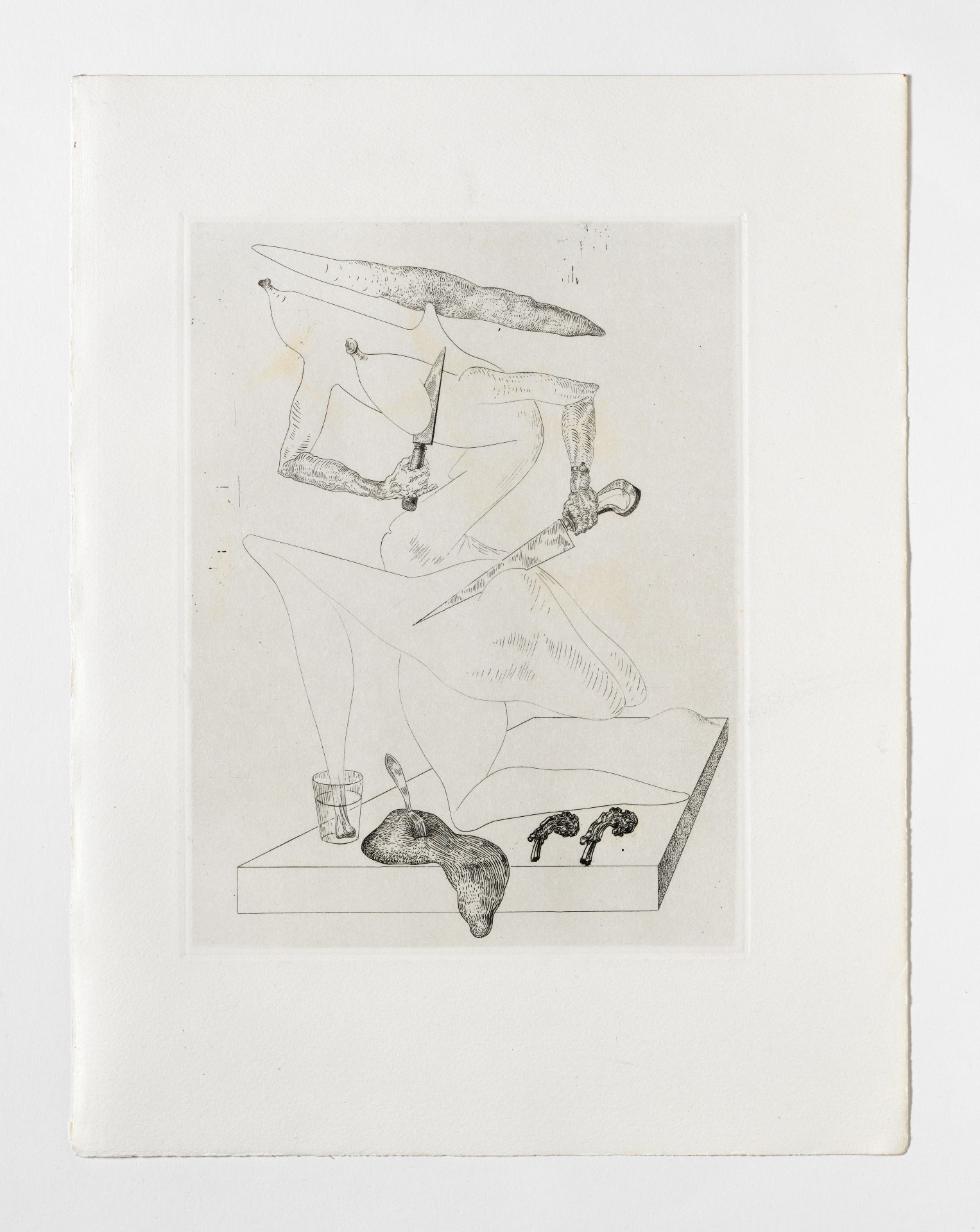
In preparing the Catalogue raisonné of Graphic Works by Salvador Dalí, the unique nature of the artist’s graphic work has been taken into account throughout, and its particularities are accordingly reflected in the structure and presentation of this catalogue. The editorial approach is based on the two existing catalogues raisonnés of the Fundació Gala-Salvador Dalí: the Catalogue raisonné of Paintings by Salvador Dalí and the Catalogue raisonné of Sculpture and Three-Dimensional Works by Salvador Dalí.
Like these earlier catalogues, the publication of this catalogue raisonné in digital format allows for the ongoing expansion and revision of its contents. The team remains dedicated both to preparing the subsequent sections and to expanding the information presented in the sections already published.
The process of creating a publication of this nature comprises several phases, which are described below to afford a fuller understanding of the procedures involved.
1. DEFINITION OF CRITERIA FOR IDENTIFICATION AND CLASSIFICATION
In the first instance, it was essential to establish criteria for identifying and classifying Salvador Dalí’s graphic work, based on detailed comprehensive study of its defining characteristics. This made it possible to establish a system that clearly distinguishes between an original work, a multiple, and a reproduction.
The definition of these identification and classification criteria derives, firstly, from the study of the artist’s graphic work exhibited at the Dalí Theatre-Museum and in the holdings of the Fundació Gala-Salvador Dalí. This study was carried out by the Faculty of Fine Arts of the University of Barcelona in collaboration with the Fundació Gala-Salvador Dalí between 2002 and 2016. Secondly, the definition of these criteria is based on evaluation of all the documentation of the artist’s works and the bibliography, and from the analysis of other works that have been incorporated as a result of a policy of print acquisition. Several items from international cultural institutions have also been taken into account.
All of this has served as the basis for defining and establishing the Fundació Gala-Salvador Dalí’s Artistic Criteria for Graphic Works, an essential document for the classification and dissemination of the artist’s graphic work.
2. CONTENT
The catalogue raisonné is unique in including all the graphic works that can be identified as original works by Salvador Dalí. The identification of an original work has been determined in accordance with The Fundació Gala-Salvador Dalí’s Artistic Criteria for Graphic Works.
The first section of the catalogue, covering the artist’s graphic work up to 1940, consists primarily of works from the Fundació Gala-Salvador Dalí collection, together with a smaller umber of works from the collections of various institutions, museums, and private collections worldwide.
In order to facilitate the understanding of the technical information relative to the works studied, this catalogue raisonné contains a Glossary.
3. STRUCTURE
The publication of the Catalogue raisonné of Salvador Dalí’s Graphic Works is structured in consecutive chronological sections detailing the results of the study of the artist’s graphic work, as outlined in the Chronological Overview.
4. IDENTIFICATION OF WORKS
As noted above, the first section covers the artist’s graphic work up to 1940. It includes all the works known and documented in existing catalogues raisonnés, in the bibliography, and in various other sources, together with the works from the artist’s bequest in the collection of the Fundació Gala-Salvador Dalí.
5. DOCUMENTATION
The exhaustive research and documentation carried out by the team responsible for this catalogue raisonné has centred on works in the collection of the Fundació Gala-Salvador Dalí, in collaboration with the Centre for Dalinian Studies, and to a lesser extent with other, external archives.
For the works from these external sources, the work has benefitted from the details provided by the owners of the works, with additional information compiled from various documentary sources, especially manuscripts, contracts, correspondence, photographs, publications, exhibition catalogues, ephemeral documents, and so on.
Further valuable supplementary documentation has been provided by the Museo Nacional Centro de Arte Reina Sofía in Madrid, the Museu Abelló in Mollet del Vallès, the Bibliothèque Nationale de France, The Dalí Museum in St. Petersburg, Florida, and the National Gallery of Art in Washington, DC.
6. CONTACT WITH OWNERS
Once all the works that initially met the requirements for inclusion in this catalogue raisonné had been selected and documented, the owners of these works were contacted to request further information. A special form was created for this purpose, with the different sections required to elicit the information necessary for the works to be included in the catalogue raisonné.
In those cases where we have not received a response to this request for information, the proposed inclusion of the work has been held in reserve, and it does not appear in the Catalogue raisonné of Salvador Dalí’s Graphic Works.
7. ATTRIBUTION OF THE WORK
Every one of the works included in the catalogue raisonné meets the necessary requirements for it to be attributed to Dalí, as indicated in previous sections.
The omission of a work from inclusion in this catalogue raisonné may be due to various reasons. Regarding attribution, the information essential to establishing an item’s authorship and originality may not be available or may not meet the requisite guarantees for it to be considered an original work by Dalí. These items become part of a study collection, a necessary preliminary to definitively establishing their authorship.
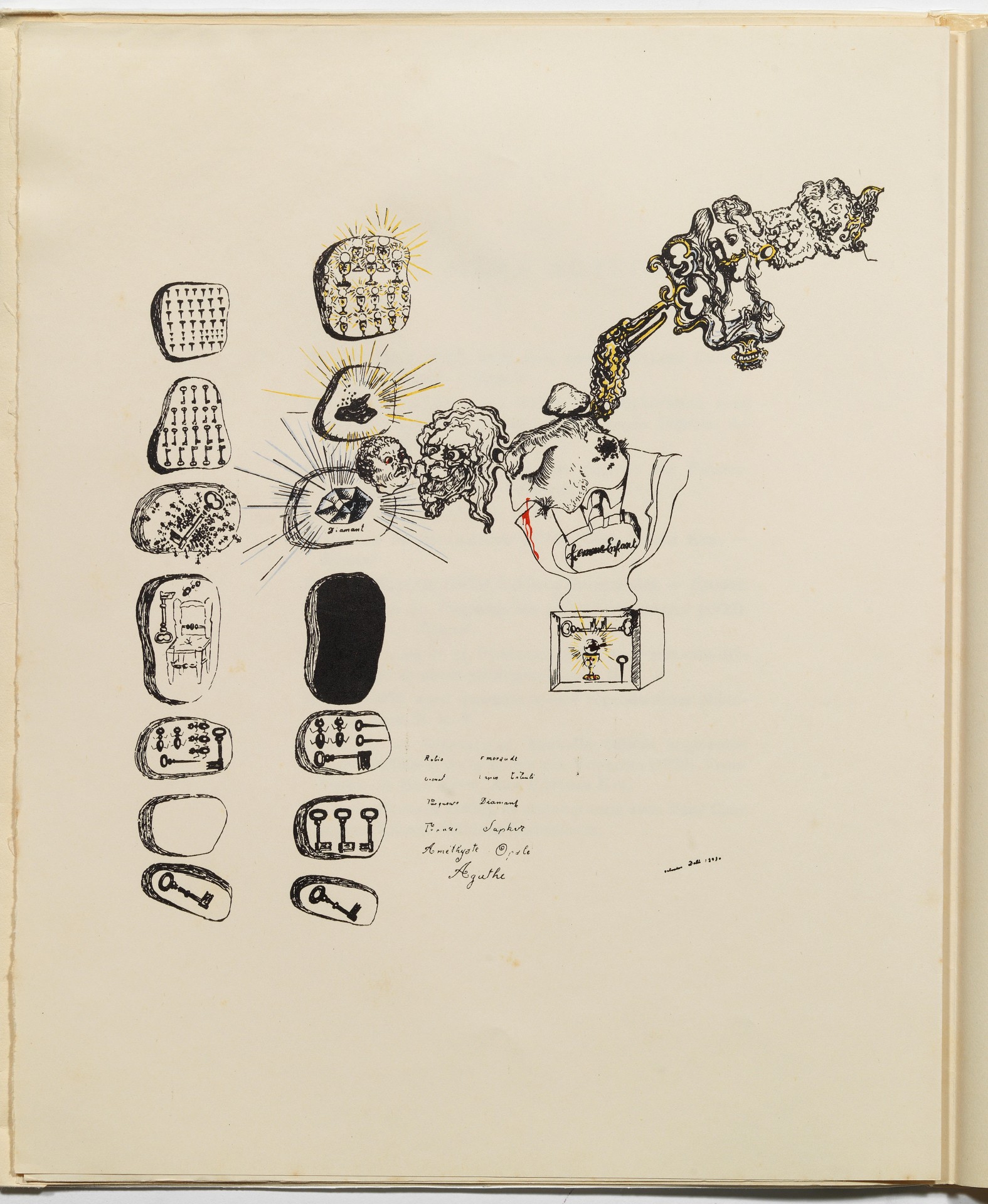
This digital edition of the Catalogue Raisonné of Salvador Dalí’s Graphic Works offers a complete and chronological overview of the artist’s graphic work.
The section About the Catalogue Raisonné has six main subsections, comprising a chronological overview, the characteristics of the original graphic works, a glossary of terms, the methodology used to create the catalogue raisonné, this user manual, and the team behind it. Additionally, a link is included that provides a detailed overview of the context for and classification of the artist’s graphic works.
Users can access the works through the search engine, by opting for either a simple search or an advanced search with a series of fields to complete. The catalogue can also be explored by way of the chronological index of works or by collection. In the latter case, the works are classified according to the owner, the institution or the collection to which they currently belong.
The information in the entry for each work, whether individual or part of a series, is structured in several sections and fields, corresponding to the parameters established in the Artistic criteria of the Fundació Gala-Salvador Dalí regarding graphic work: classification.
Further information on those prints that are part of a set or series is also provided in one or two introductory pages on the set or series.
GENERAL INTRODUCTION TO THE GRAPHIC WORKS
The index of works displays the main data serving to identify each item, allowing it to be classified within Salvador Dalí’s original graphic work by means of its catalogue raisonné number and the title of the print, the series, and the year of production.
The display of these works varies according to their type: (1) an individual print; (2) an individual print included in a published book (frontispiece), a print that is part of a set, whether in a book, folder, or other format; and (3) a set comprising several volumes.
For prints in type (1), the user directly accesses the entry for the work, which includes explanatory text and other specific fields, together with an image of the work, which can be viewed in high resolution.
For prints in type (2), there is an initial presentation page for the work, indicating the title and year, an explanatory text, and other details; images in a carousel; and a view of the prints in the set. For some prints, a timeline at the top indicates the existence of other editions of the work. The user has the option of selecting each print individually, with its detailed profile, together with an image, which can be explored in high resolution.
For prints in type (3), there is an initial presentation page, indicating the title and year, an explanatory text, and other details, as well as images in a carousel. At the top, the user can view and browse the different volumes of the collection. When one of these volumes is selected, a presentation page is displayed featuring a carousel of images with the associated prints. The user has the option of selecting each print individually, with its detailed profile, together with a high-resolution image.
The content of each field is then broken down into three sections: (1) Initial Presentation of the Work, (2) Detailed Presentation of the Print, and (3) Additional Information about the Print. These sections contain the information corresponding to each of the prints listed in the Catalogue Raisonné of Salvador Dalí’s Graphic Works.
1. INITIAL PRESENTATION OF THE WORK
Cat. No. OG
Each work in the Catalogue Raisonné of Salvador Dalí’s Graphic Works has its own unique permanently associated number, presented with the initials OG.
Title
The original title of a graphic work is the title recognised as designating it by the artist. The documentation associated with the relevant editions has been reviewed and corroborated, together with a survey of period documentation, exhibition catalogues, Dalí’s own writings (both manuscripts and publications), and existing catalogues raisonnés.
First, the original title of the work is given (in italics and bold), followed by its translation into the language selected by the user (in regular and bold). Next, if applicable, other known titles of the work from Dalí’s lifetime are noted in the selected language in regular type. These are usually the titles assigned by the artist, although they may also be known from other documentary sources, always dating from Dalí’s lifetime.
In the case of prints that are also book frontispieces, these are indicated by their generic terminology and are presented in the selected language in regular type and bold.
Where the original title assigned by Dalí is not known, but other titles published during the artist’s lifetime have been identified, these will be shown in regular type and bold, translated into the selected language.
When neither the original title nor any other title identified during Dalí’s lifetime is known, the work is usually given as ‘Untitled’, in regular type and bold. There may be cases where a descriptive title is also included, preceded by the ascription ‘Untitled.’
Where typographical or spelling errors have been detected in a title, these have been corrected and the original title, as it first appeared in publication, is recorded under the section heading ‘Observations’.
The titles of many of the works studied include a Catalan place name, and this has been standardised in accordance with the updated Nomenclàtor oficial de toponímia de Catalunya, the official gazetteer of Catalonia.
Series Title
The series title refers to one or more items that form part of a single set. In many instances, such a set is a published book with illustrations by the artist. In other instances, the set is a group of items compiled in a portfolio or other format, brought together under a shared concept. The series title is given in italics.
Image
The reproductions of the works are in colour or monochrome, in accordance with the work itself. In some instances, more than one image is shown to further supplement the information presented.
Index of works and volumes – a small, low-resolution image
Carousel– a medium-size, low-resolution image
Print image – a large, high-resolution image
Copyright
The caption below the image provides information on reproduction rights and copyright of the graphic work. For further information, please contact the Fundació Gala-Salvador Dalí’s Copyright Department: maznar@fundaciodali.org.
2. DETAILED PRESENTATION OF THE PRINT
This section provides detailed information about the work: author, date, technical description, signature, etc.
Type of original graphic work
This provides a classification of the graphic work according to the Artistic criteria of the Fundació Gala-Salvador Dalí regarding graphic work. Double-clicking on this point links to the Original Graphic Work section, giving a concise explanation of the distinguishing characteristics of each type of original work by Salvador Dalí.
Presentation text
Given the complexity and variety of the graphic work, a brief description presents information relating to the creation, iconography, and context of the item under consideration, with supplementary details to facilitate a fuller appreciation of the artist’s graphic work.
Specifics of the set
An image and basic information are provided for the additional or secondary images of this item, such as vignettes, suites, proofs, plate decomposition, or other graphic elements of the copy.
Other editions
This includes a link providing information on other editions.
Related multimedia content
This includes a link to a variety of multimedia content related to this item.
Title of the written work
The title of the book or other published work.
Author of the written work
The full name of the author of the book or other published work.
Series
The series is the set of graphic works created by the artist, in which the prints are conceptually and thematically related and published together.
Author of the print
The author of the print – Salvador Dalí i Domènech – or Salvador Dalí i Domènech and another artist or artists if the authorship is shared.
Description of the work
The formal characteristics of the item.
Date of production
The dating of the work corresponds to the date of its creation, which has been determined in several ways.
For published books, series, and sets of graphic works with a print run justification, credit is given to the date of production indicated on the item itself.
For works for which justification of the print run is not available, credit is given to whether the work is dated by Dalí himself, directly on the item, and/or in any related document (a contract or other document associated with the creative process). Exhibition catalogues from the work’s first exhibition are also considered, as well as other catalogues of graphic works, etc.
In some instances, a specific date cannot be determined due to a lack of precise information, with an indication instead of a date preceded by the lower-case c. (circa) or a probable range of two or more years. The button on the right gives access to the index of works and the display of all works within the same chronology.
Publisher
This refers in all instances to the publisher of the first edition of the work. Subsequent editions, if any, will be noted on the timeline.
Printer
This refers in all instances to the printer of the first edition of the work. When there is more than one printer, their names will be separated by a slash.
Engraver
This refers to the engraver of the print.
Technique and support
This indicates the technique used to create the graphic work and its support.
Dimensions
The dimensions of the work are detailed in centimetres and correspond to height, width, and depth, in this order. The measurements are taken directly from the work. Where this was not possible, information provided by the relevant institution is given.
Signature
The signature is described, together with its location on the work, and whether it is a handwritten or a plate signature, a monogram, or a stamped impression. Also noted where relevant is the absence of a signature or if the work was signed by the artist at a later date.
Owner
This section identifies the current owner of the work.
Location
This section indicates the name of the institution, museum, or collection in which the work is currently held. If the owner has chosen to remain anonymous, the location is listed as a private collection. There is a link from this section to the list of collections.
Provenance
This section notes any previous locations of the item when these are reliably known.
3. ADDITIONAL INFORMATION ABOUT THE PRINT
Inscriptions
This refers to text located on the print or elsewhere in the book containing the print. This inscription may be handwritten—a dedication or other annotation in pencil or pen, etc.—or printed text.
Collection marks
Noted here are any stamps or other indications associating the work with a specific collection, a private individual, a publisher, etc.
Date notes
In some instances, the date on the plate differs from the publication date, because the illustration reproduced predates the printing of the edition.
Copy number
This field notes the copy number.
Watermark
This section details the watermark(s) on the paper, if any.
Embossing
This section provides a literal transcription of any embossing.
Observations
This section includes any other information, comments, or references to the graphic work of special relevance for its study or understanding.
Edition
This refers to the specific unitary set of works, the number of which is usually decided in advance by the artist and their publisher.
Bibliography
This section lists the most important publications—monographs, exhibition catalogues, press clippings, etc. —containing a reproduction of the work in question, noting the page on which it appears.
Exhibitions
A list, in chronological order, of the major exhibitions in which the work has been shown.
Related works
This section notes other works with a some significant relation to the print in question, such as drawings, paintings, other graphic works, etc.
SCIENTIFIC DIRECTION
Montse Aguer Teixidor, Director of the Dalí Museums and the Centre for Dalinian Studies
Juliette Murphy, Conservator, Graphic Arts Specialist at the Fundació Gala-Salvador Dalí
RESEARCH AND STUDY OF THE WORKS
Coordination: Juliette Murphy, Conservator, Graphic Arts Specialist at the Fundació Gala-Salvador Dalí
Research and Documentation: Juliette Murphy and Noelia García Valencia, Conservator-Restorer, Department of Restoration and Conservation
Artistic and technical consultancy: Irene Civil Plans and Laura Feliz Oliver (and previously, Georgina Berini and Dolors Velasco).
The study of the works has benefited from the collaboration of the team at the Restoration and Conservation Department: Elisenda Aragonés, Yvonne Heinert, Josep M. Guillamet Lloveras; and the Centre for Dalinian Studies: Carme Ruiz, Rosa Maria Maurell, Laura Bartolomé, Lucia Moni, Bea Crespo, Claudia Galli i Maria Carreras
Special thanks to the interns at the Centre for Dalinian Studies who collaborated on the documentation: Eloïse Gentié, Rabea Blasczyk, Jessica Adamo, Alessia Piscicelli, Pola Grycewicz, and Yana Kuchynskaya.
Legal services: Isabella Kleinjung
Rights management: Mercedes Aznar Laín
Text revision and translations: Olga Jornet (Catalan and Spanish), Marielle Lemarchand (French), Graham Thomson (English)
Special thanks to all the institutions, museums, and private collections, and to all the people who have contributed to this Catalogue Raisonné of Salvador Dalí’s Graphic Works by providing information about the works under study.